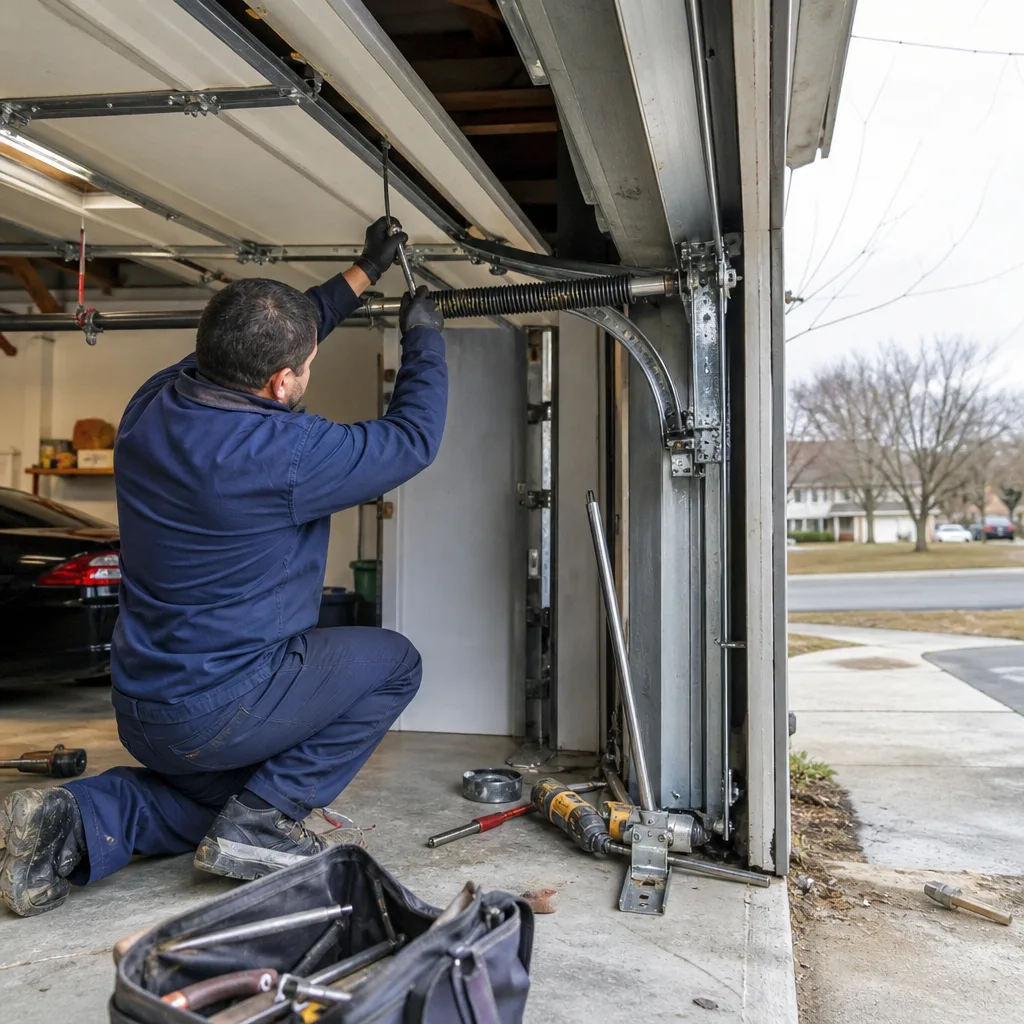
Last updated November 23, 2026
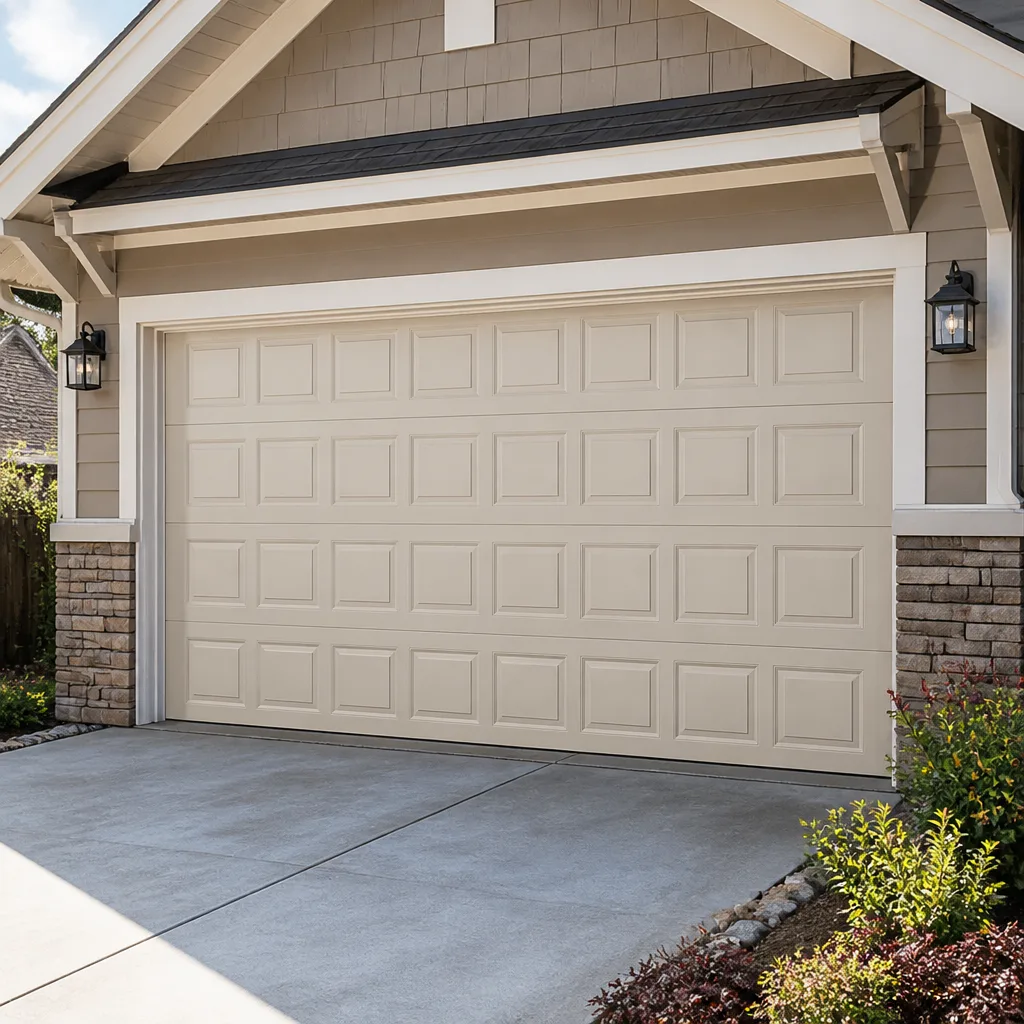 Raised-panel steel
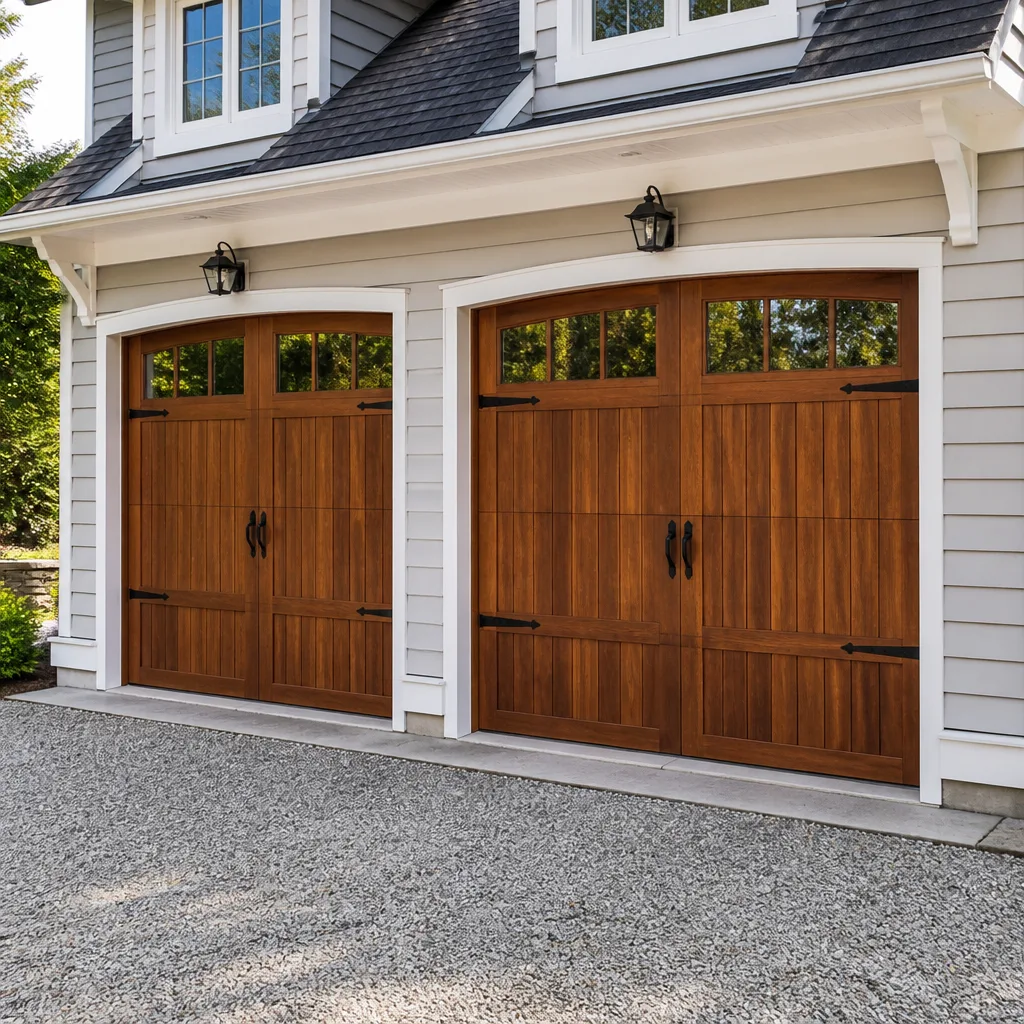 Carriage house
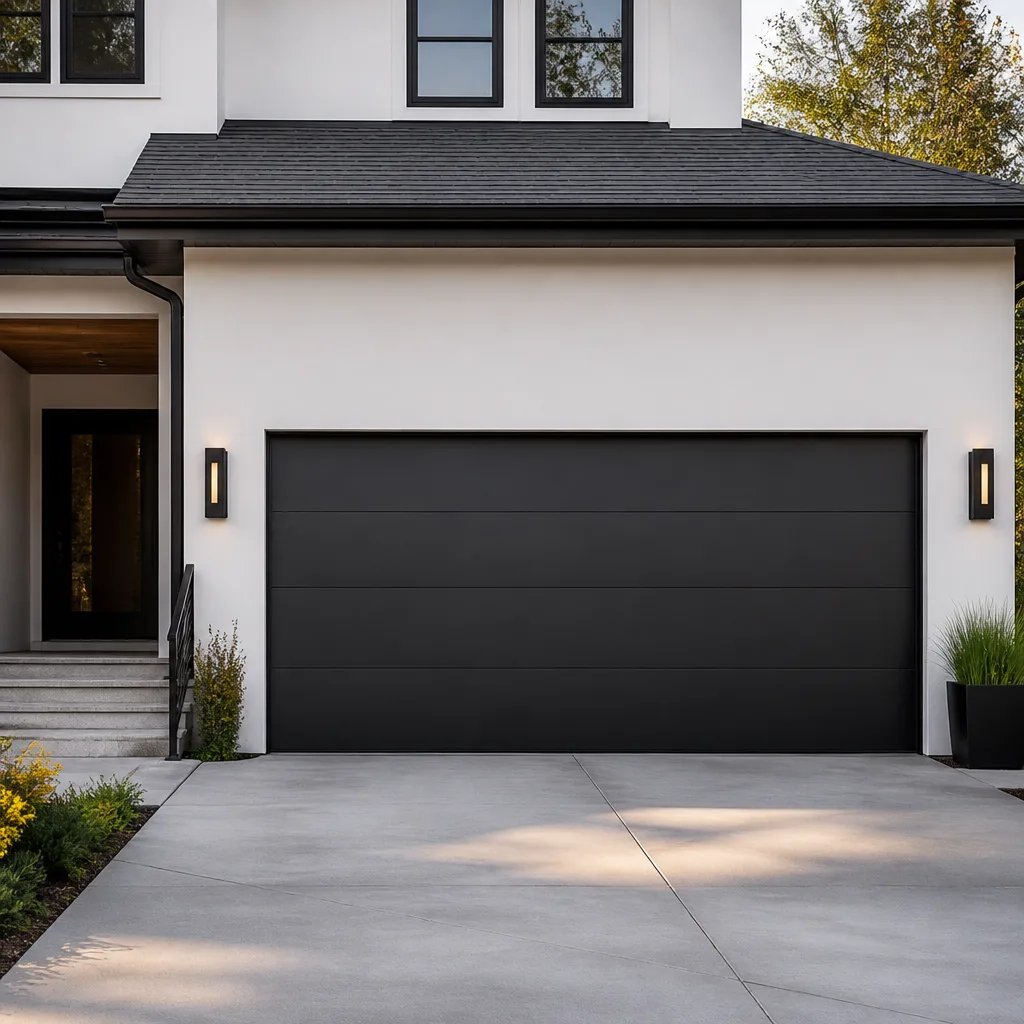 Modern flush
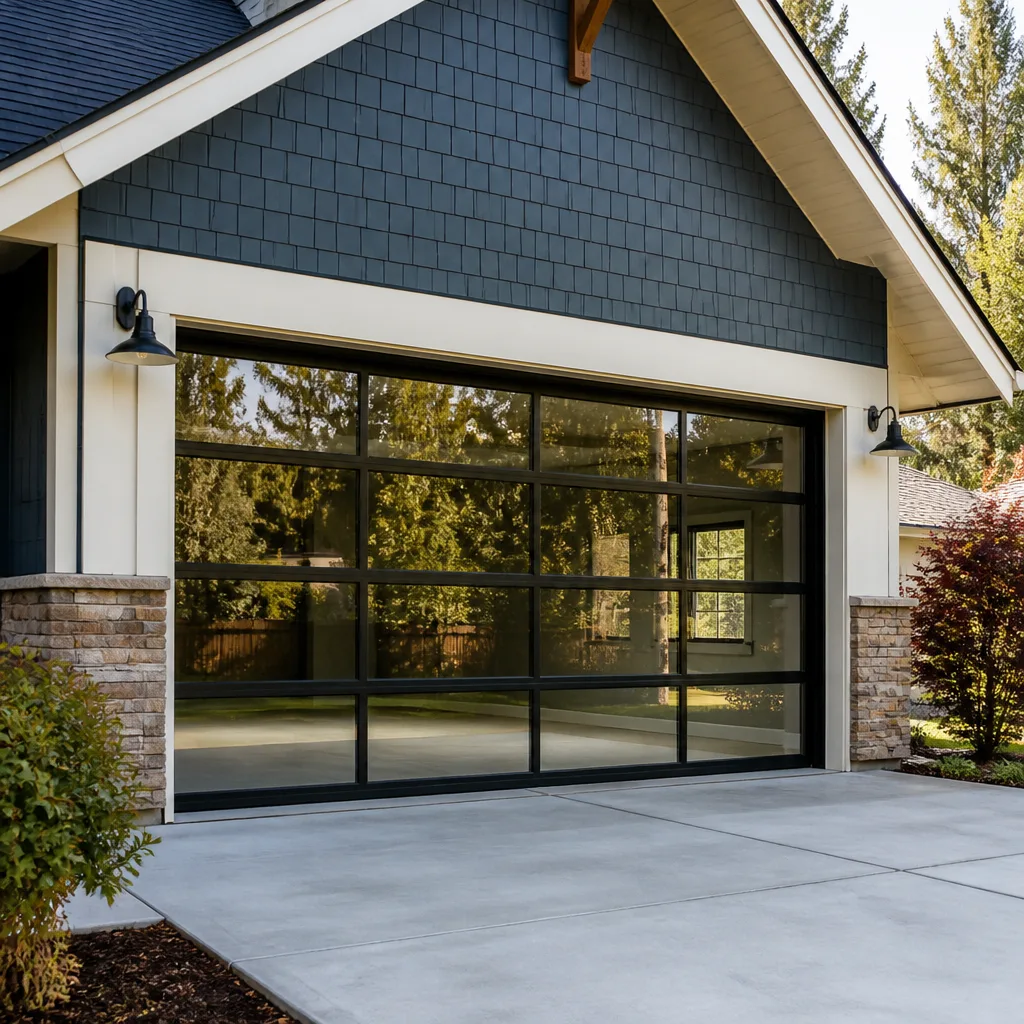 Full-view glass
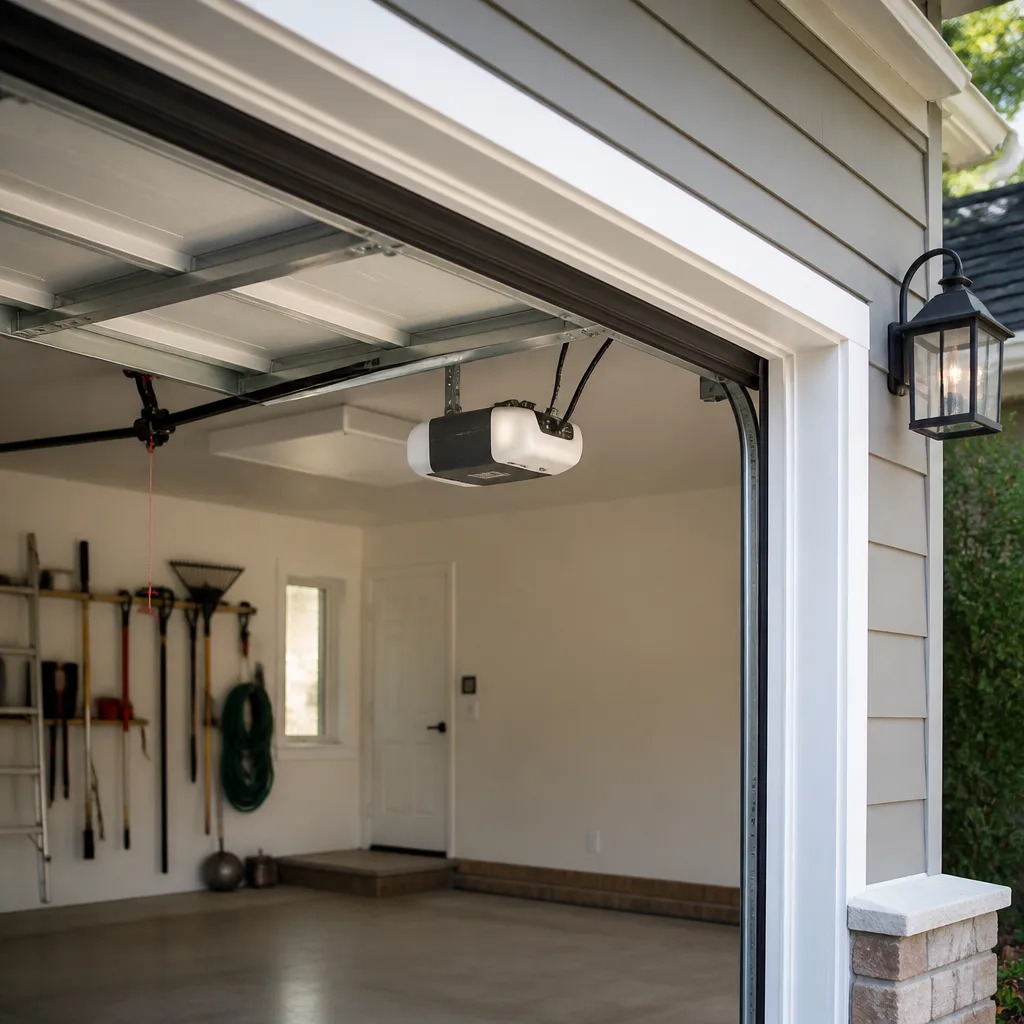 LiftMaster openers
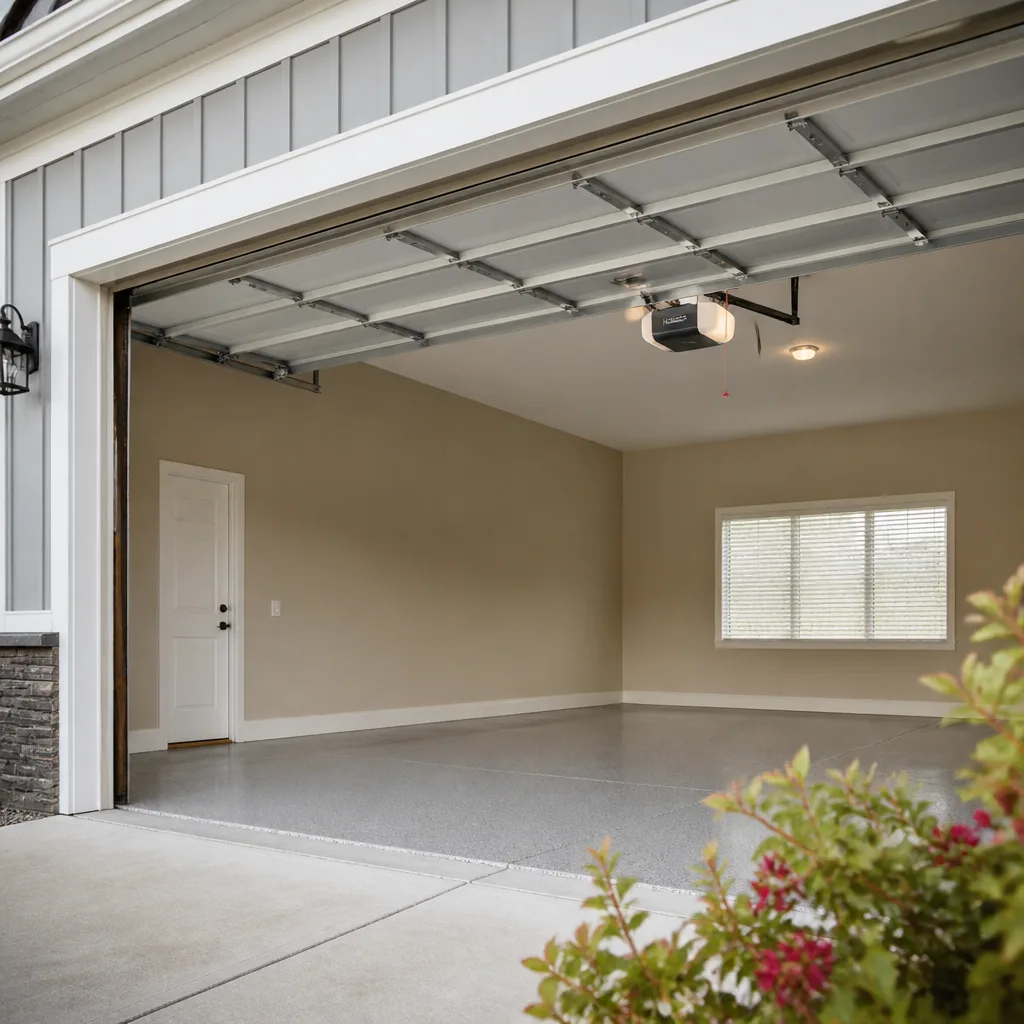 Chamberlain openers
Full 25-point door and opener safety check with every visit - springs, cables, rollers, tracks, and your LiftMaster or Chamberlain opener included
You get a price before we start. It does not change when the pro arrives.
Get your free estimateGarage Door Repair Maintenance Checklist for Weequahic Homeowners
A snapped torsion spring rarely gives zero warning. Nine times out of ten, there were signs in the weeks before – a door that felt a little heavier, a cable with a stray strand, a bottom bracket turning orange with rust – and nobody knew they meant anything. That’s the problem with most maintenance advice: it’s written to sell a service contract, not to tell you what actually fails first on a garage door in Weequahic. This checklist is built around local conditions, housing stock, and how often these doors get used. You’ll get a prioritized list of what to check yourself, what to leave alone, and the exact moment to stop and call a technician.
Quick Answer
Check your garage door once a month: look for rust on bottom brackets, frayed cables, and wood rot at panel bottoms. Test the balance twice a year and listen for new noises every week. Lubricate springs, hinges, and rollers with a proper garage door lubricant, never WD-40. Anything involving springs, cables, or bottom brackets requires a trained technician, because those parts hold dangerous tension.
Styles & brands we work with
- Raised-panel steel
- Carriage house
- Modern flush
- Full-view glass
- LiftMaster openers
- Chamberlain openers
Table of Contents
- Why Weequahic Garage Doors Fail Differently
- The Monthly Checklist: What to Check Yourself
- Failure Patterns Common to Aging Doors in Northeastern NJ
- The Balance Test and What Out-of-Balance Feels Like
- Lubrication Points, Correct Products, and What Not to Use
- This Requires a Tech: Where DIY Stops
- A Maintenance Log Template for Faster Diagnosis
- When to Call a Professional
Why Weequahic Garage Doors Fail Differently
Weequahic’s housing stock includes a lot of older construction, and older garages were built with lighter-gauge steel panels, wooden bottom sections, and hardware that has seen many heating and cooling cycles. Those cycles matter. A garage in Weequahic goes from a cold night to a heated garage or a sun-baked driveway repeatedly, and the metal expands and contracts along with it. That movement loosens hinge screws, works rollers out of their tracks, and stresses cables at the pulleys.
The northeast climate adds another layer. Winter road salt gets tracked into the garage on car tires and undercarriages. That material settles on the floor, splashes onto bottom brackets, and sits in the low points of the door where it accelerates rust. Cables that run near the bottom of the door pick up that same exposure, which is why we see cable fraying start at the bottom and work upward on many Weequahic doors.
Then there’s usage. In a dense, walkable area where parking is tight and driveways are short, the garage door often becomes the front door. Cars go in and out more times a day than they would in a suburban house with a long path to the front door. More cycles means more wear on springs, rollers, and the opener’s drive system. That’s the pattern we plan around when we inspect a Weequahic door: higher cycle count, heavier weather exposure, and hardware that may have been installed when the house was built.
None of that means every older door is failing. It means the failure order is predictable. Springs go first because they’re doing the most work and carry the most tension. Cables follow, especially near the floor. Rollers and hinges wear gradually and announce themselves with noise long before they cause a problem. If you know that order, you can spend your attention in the right place.
The Monthly Checklist: What to Check Yourself
This is the part you can do safely, in about five minutes, without tools beyond a flashlight and your own hands. Do it once a month, ideally the same weekend each month so you don’t forget.
- Look at the bottom brackets and the bottom panel edges. Any orange or brown discoloration is rust starting. Light surface rust can be treated. Deep rust on the bracket itself is a call-us item.
- Scan both cables. Look for stray strands, kinks, or a cable that’s sitting unevenly on a drum. A frayed cable is a hard stop.
- Check the wood or metal bottom section for rot or crumbling. Wood at the bottom of the door is the part closest to the wet floor. Press it lightly with a screwdriver handle; if it gives, it’s soft.
- Open and close the door and listen. A door that used to be quiet and now squeaks, pops, or grinds is telling you something changed. Note which side the noise comes from.
- Look at the rollers in their tracks. Wobbling rollers, rollers with flat spots, or rollers that have come out of the track need attention.
- Test the safety reverse. Place a roll of paper towels under the door path and close it. The door should reverse on contact. If it doesn’t, stop and call.
- Check the photo-eye sensors at the bottom of the tracks. They should be aligned, clean, and the indicator light should be steady. A blinking light means something is interrupting the beam.
Everything on that list is safe to touch or observe. The moment you move from looking to adjusting a cable, a spring, or a bottom bracket, you’ve crossed a line. Those parts hold stored energy that can release without warning and cause serious injury. We’d rather you call us than learn that the hard way.
Failure Patterns Common to Aging Doors in Northeastern NJ
We’ve looked at enough Weequahic doors to see patterns repeat. These aren’t guesses; they’re what shows up again and again in this climate and this housing stock.
- Rust on bottom brackets and bottom hinges. The lowest parts of the door get the most moisture and the most road salt tracked in on tires. Rust weakens the bracket, and a weakened bracket is a failure point.
- Cable fraying that starts low. Because cables run down the side and terminate near the bottom of the door, winter grit and moisture attack them there first. A cable with broken strands loses strength fast.
- Wood rot on older panel bottoms. Many doors in Weequahic were built with wooden bottom rails or full wood sections. That wood sits closest to the floor, where condensation and street water collect. Rotting wood can’t hold hinges or brackets securely.
- Roller wear from high cycle counts. Doors used as primary entry points wear rollers faster. Worn rollers make the door noisy and put more strain on the opener.
- Tracks that get out of alignment from house settling. Older structures move. A track that’s a quarter-inch off can cause the door to bind, which stresses cables and springs.
- Opener strain on doors that haven’t been serviced. When the door gets heavy, the opener works harder than it was designed to. That’s when the opener fails, even though the door was the real problem. We cover that in more depth on our garage door opener repair page.
If you recognize any of these on your door, you already know more than most homeowners. The next step is deciding whether it’s a watch item or a service call. Rust on a bracket that’s still solid: watch it monthly. Rust on a bracket that’s structurally compromised: call. Frayed cable with one broken strand: call. Rot that lets a screwdriver sink in: call.
The Balance Test and What Out-of-Balance Feels Like
A properly balanced door should stay put when you let go of it halfway open. If it drifts down or rushes up, the springs are no longer doing their share of the lifting, and the opener is picking up the slack.
Here’s how to test it safely:
- Disconnect the opener. Pull the emergency release handle so the door is on manual.
- Lift the door to about waist height by hand. Use the lift handle or the bottom edge, not the hinges or rollers. If the door feels unusually heavy, stop there; that’s already an answer.
- Let go and watch. A balanced door stays roughly in place. A door that drops on its own has weak springs. A door that lifts itself has too much tension.
- Lower it gently and reconnect the opener. If the door fell or rose on its own, don’t reconnect and use the opener. Call a technician.
What does out-of-balance actually feel like? Often it feels like the door has gained weight. You lift it and it resists more than it used to. Sometimes it feels lopsided, with one side heavier than the other, which can point to a spring that’s losing tension or a cable that’s slipping. Other times the door feels fine going up but slams down the last stretch. Any of those signs means a technician should check the spring system.
Don’t adjust springs yourself. Torsion springs are under extreme tension and can cause serious injury if they release unexpectedly. Extension springs have their own dangers and can whip if a safety cable isn’t in place. This is exactly why we treat spring work as its own specialty rather than a general repair task.
Lubrication Points, Correct Products, and What Not to Use
The right lubricant, in the right places, twice a year, will quiet a noisy door and extend the life of your rollers and hinges. The wrong lubricant, or the wrong spots, will attract dirt and make things worse.
What to use: A white lithium grease or a dedicated garage door lubricant, applied sparingly. For rollers, a light lubricant is best. For hinges and the torsion spring surface, a heavier garage door lubricant works better because it stays put.
Where to apply it:
- Hinge pivot points (a drop on each, not a glob)
- Roller bearings and the roller stems
- The torsion spring coils (a light film, not a soak)
- Lock hardware, if your door has a manual lock
What not to use: WD-40 on springs is one of the most common homeowner mistakes we see. WD-40 is a solvent and a light penetrant, not a long-term lubricant. It strips the existing lubricant and evaporates, leaving the spring drier than before. After a few cycles, you get more noise and faster wear. Avoid it on bearings, springs, and rollers. It’s fine for a stuck bolt, wrong for a moving part that needs to stay lubricated.
Silicone spray is another one to keep away from springs, though it’s acceptable on some plastic components. The general rule: match the lubricant to the part. When in doubt, ask before you spray. Getting this right matters more in Weequahic than in a lot of places because the seasonal temperature swings mean the lubricant has to hold up through both hot and cold stretches.
This Requires a Tech: Where DIY Stops
There’s a clear line between what a homeowner can safely check and what a trained technician should handle. We don’t blur that line, because the consequences of getting it wrong are serious.
Call a technician for anything involving:
- Torsion springs (the horizontal springs above the door). These are under extreme tension.
- Extension springs (the springs that run alongside the tracks). They can fail violently if released.
- Cables and drums. A cable under tension can whip and cause injury.
- Bottom brackets. Removing a bracket with a live cable attached is dangerous.
- Track realignment if the track has separated from the wall.
- Opener wiring and circuit board issues.
What we can tell you is what’s involved, not how to do it yourself. A spring replacement starts with controlling the tension, then swapping the spring safely, then rebalancing the door and checking that the opener’s force settings match the new spring. That’s a sequence that requires the right tools and a trained eye. If your door needs garage door repair, we can walk through what’s involved before any work starts, so you know exactly what you’re paying for.
If the door has fully failed and won’t open or close, that’s an emergency situation, and you should call right away. We treat emergency work as a standing offering, not something that gets squeezed in when there’s time.
A Maintenance Log Template for Faster Diagnosis
Most homeowners can’t tell a technician when a noise started or what changed in the last six months. That information is gold during a diagnosis, because it narrows down which part is failing. Keep a simple log and bring it to your next service call.
Here’s a template you can copy into a notebook or a note on your phone:
- Date: When you did the check or noticed the problem
- What you checked: Brackets, cables, rollers, balance, safety reverse, photo eyes, sound, lubricant
- What you found: One line per item. “Bottom bracket showing surface rust.” “Left cable has one frayed strand.” “Door feels heavier than last month.”
- What you did: Lubricated hinges, cleaned photo eyes, nothing
- Changed since last month: Any new noise, new vibration, new light on the opener, new draft
- Action needed: Watch, lubricate, or call
Two minutes of writing a month saves real diagnostic time. When a technician arrives and you can say “the door started grinding on the left side about six weeks ago, and it got worse after the cold snap,” the diagnosis is faster and the repair is more targeted. It also helps you spot patterns you’d otherwise miss, like a cable that’s been slowly fraying for months.
If you have a newer door from a brand like Clopay or Amarr, note the model if you can find it on the door or in your paperwork. Same for the opener – a Chamberlain or LiftMaster unit has a model number on the back panel. That information lets us confirm compatibility before we arrive, which is why brand knowledge matters.
Common Mistakes to Avoid
- Spraying WD-40 on the springs. It strips the real lubricant and leaves the metal drier. Use a dedicated garage door lubricant instead.
- Ignoring a door that “just feels heavy.” That heaviness is usually the first sign a spring is losing tension. Waiting turns a repair into an emergency.
- Adjusting the springs without the right tools or training. Torsion springs are under dangerous tension. This is the one mistake that can cause serious injury.
- Forcing a door that’s binding. If the door won’t move smoothly, the opener isn’t the problem. Forcing it can damage the panels, the tracks, and the opener’s drive gears.
- Skipping the bottom of the door. Rust on the bottom bracket and rot on the bottom panel are the most common failure points in Weequahic, and they’re easy to miss because they’re low to the ground.
- Using a general handyman for spring or cable work. A garage door specialist has the tools and training for tensioned parts. A generalist is guessing.
- Never testing the safety reverse. It’s the one test that protects people and pets. If you don’t test it, you don’t know it works.
See the difference
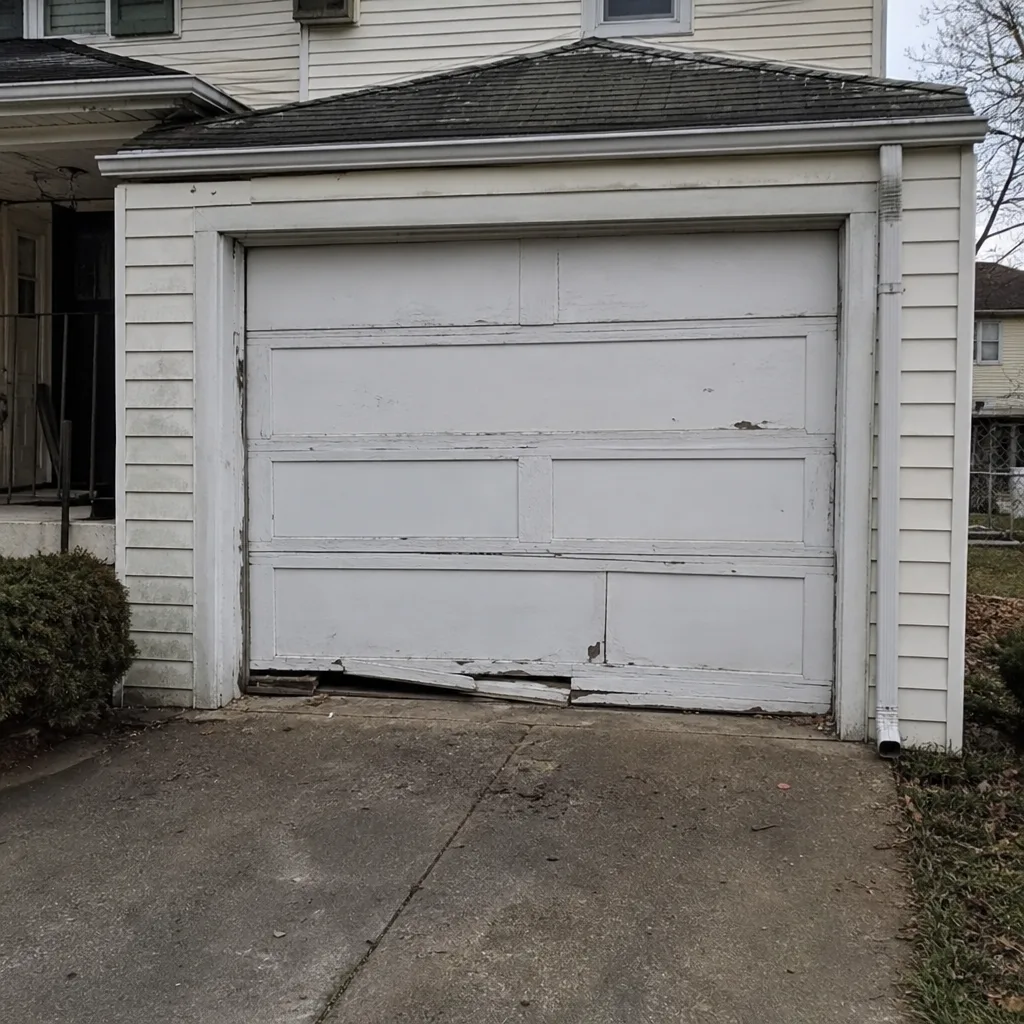 Before
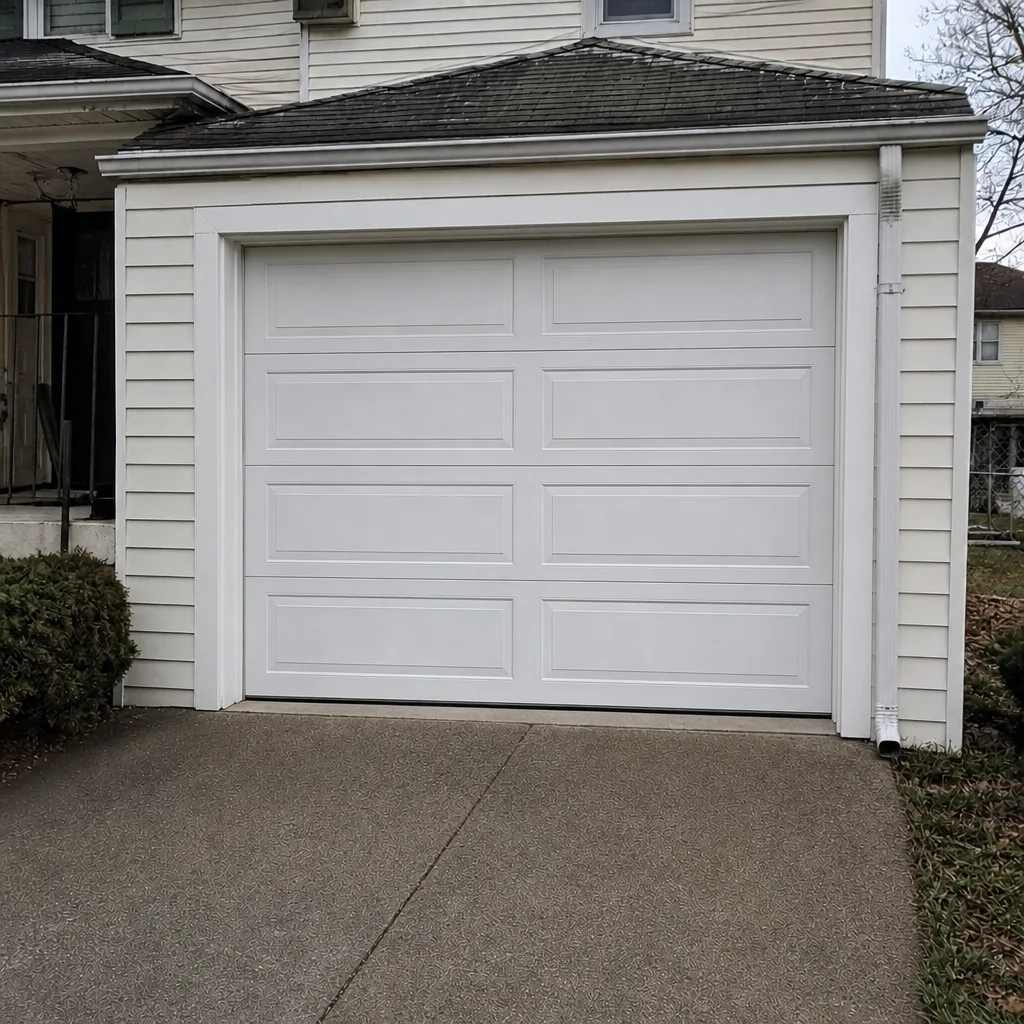 After
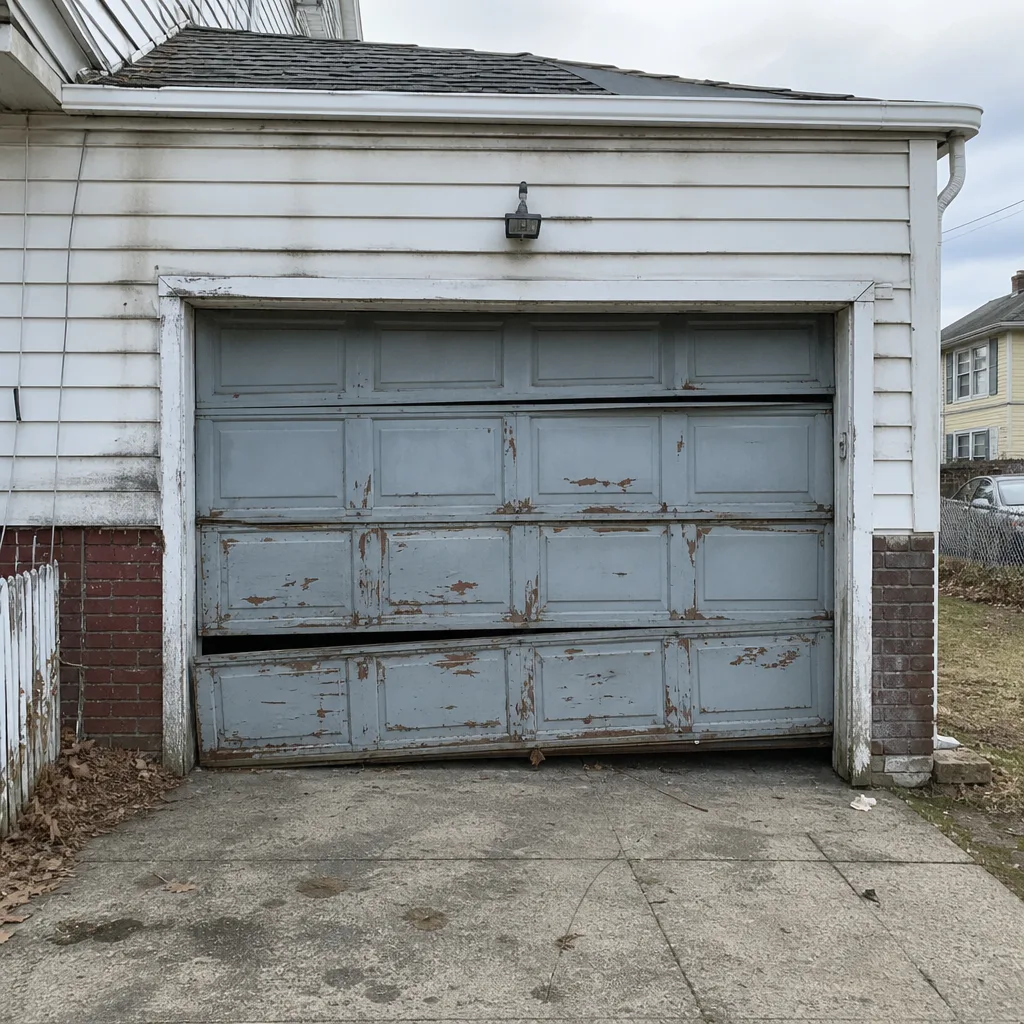 Before
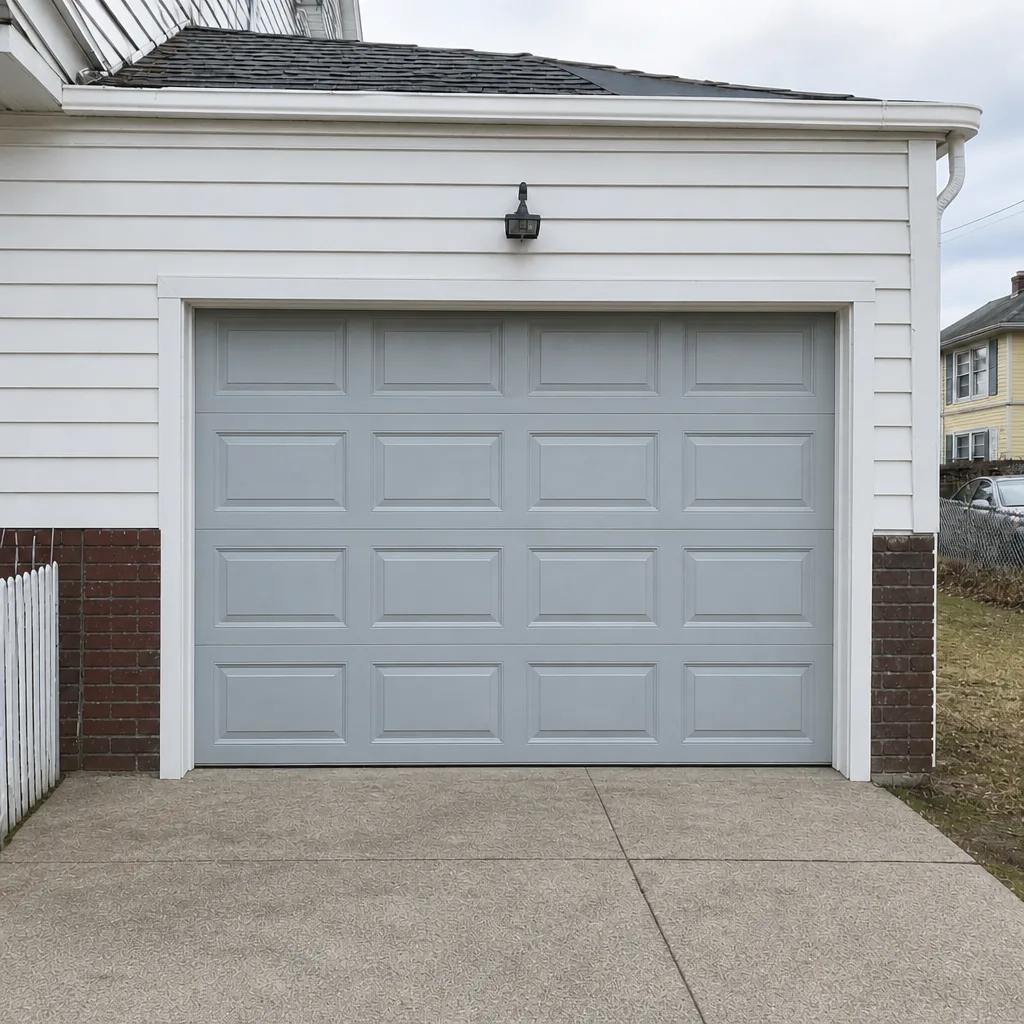 After
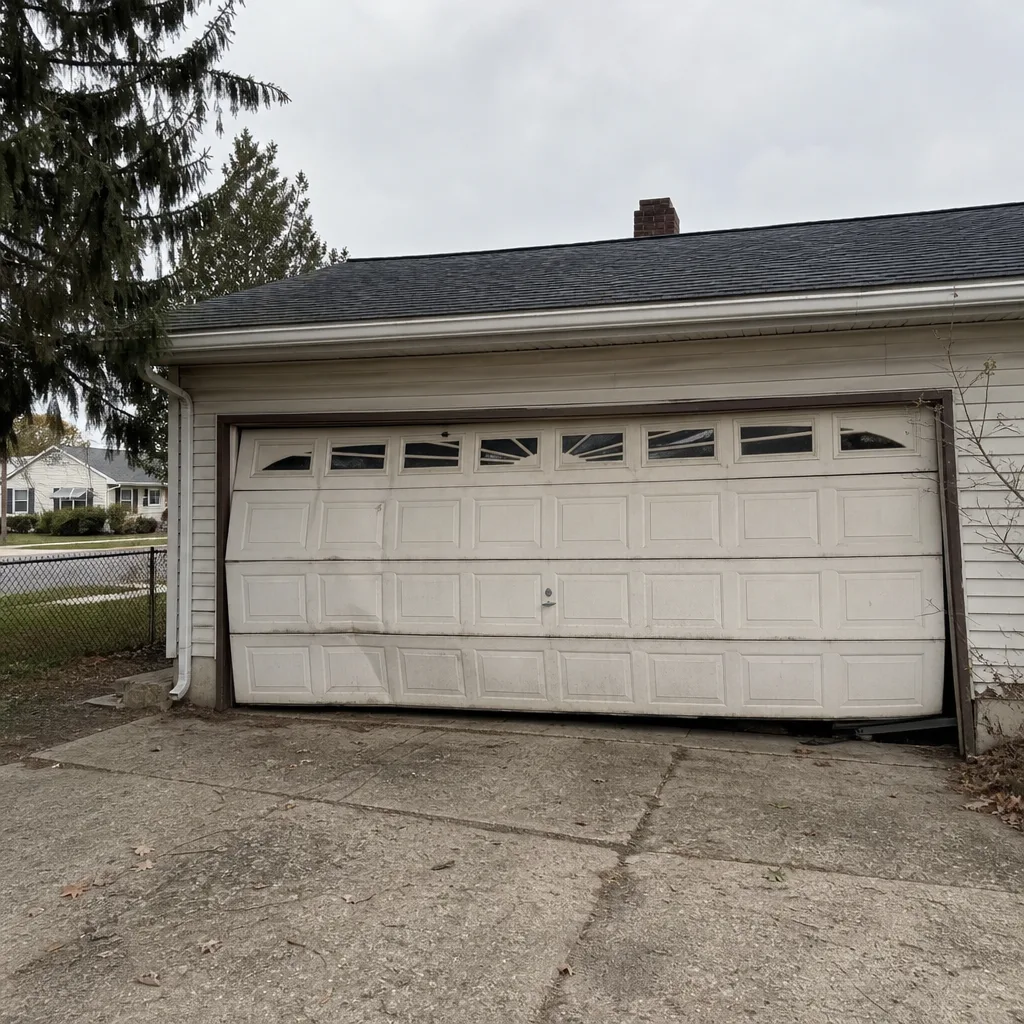 Before
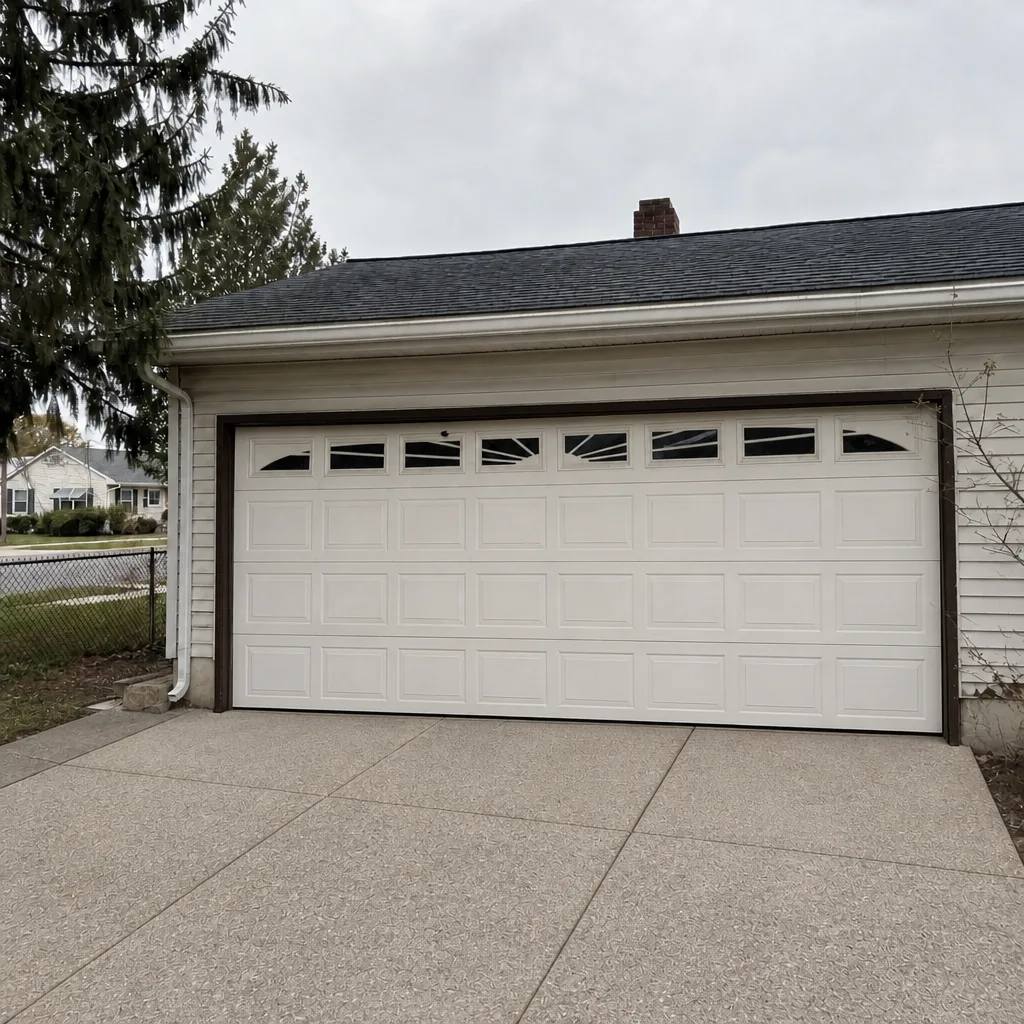 After
When to Call a Professional
Call when you find a frayed cable, a spring that’s lost tension, a bracket that’s rusted through, or a bottom section with rot. Call when the door feels noticeably heavier than it did a month ago or won’t balance halfway open. Call if the safety reverse fails, if the door comes off the tracks, or if the opener runs but the door doesn’t move. Call if you feel unsure about any part of the system, because uncertainty is not a reason to guess. Garage Door Repair Weequahic offers free estimates in Weequahic – call (833) 508-9169.
Frequently Asked Questions
Check it once a month, with a full balance test twice a year. Monthly checks catch early rust, cable fraying, and new noises. The twice-a-year balance test and lubrication routine keep the springs and rollers in condition. If your door is used as a primary entry, monthly is a minimum, not a target.
No. Torsion and extension springs are under extreme tension and can cause serious injury if released unexpectedly. The work requires specific tools and training. Call a specialist instead, and don’t touch the spring or the cable attached to it.
The springs go first on most doors, because they carry the most tension and do the most work. Cables are next, especially at the bottom where moisture and road salt collect. Rollers and hinges wear more gradually and usually announce themselves with noise before they fail.
No. WD-40 is a solvent and light penetrant, not a long-term lubricant. It strips the existing lubricant and evaporates, which leaves the spring drier than before. Use a dedicated garage door lubricant or white lithium grease instead.
The door feels heavier than it used to, or it drifts down or rises on its own when you let go halfway open. It may also feel lopsided. Any of those signs points to a spring problem, and it’s time to call a technician.
Surface rust is usually treatable, but rust that has weakened the bracket structurally means the bracket needs replacing. A technician can tell you which it is in a few minutes. If the bracket is compromised, don’t keep using the door. Call (833) 508-9169 for a free estimate.
The Bottom Line
Garage door maintenance isn’t about an annual contract. It’s about knowing the failure order and watching the right parts. Springs fail first, cables second, hardware gradually. Monthly checks catch rust, frayed cable strands, and rot before they become an emergency. A twice-a-year balance test tells you whether the springs are still doing their job. Lubricate the right parts with the right product, never WD-40 on springs, and log what you find so a technician can diagnose faster. When you hit a spring, a cable, or a compromised bracket, stop and call. That’s the line this guide draws, and it’s the line we stick to when we inspect a door in Weequahic. If you want a professional eye on your door, or you’re ready for a full replacement, our garage door installation team can walk you through options from Wayne Dalton, Craftsman, and other brands. For anything else, start with Garage Door Repair Weequahic or call us directly at (833) 508-9169 for a free estimate. Our technicians have up to 8 years of experience, and the written quote is the price.
Written by the team at Garage Door Repair Weequahic.