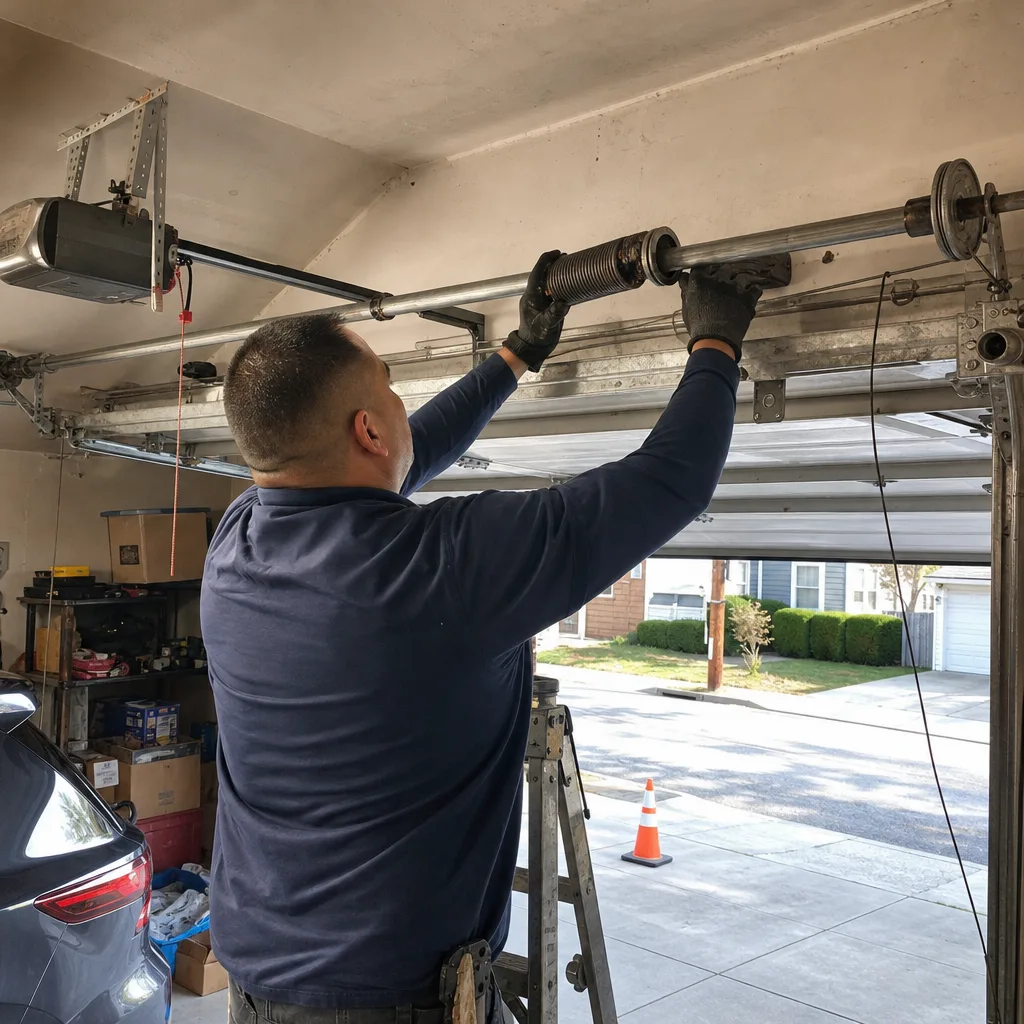
Last updated November 23, 2026
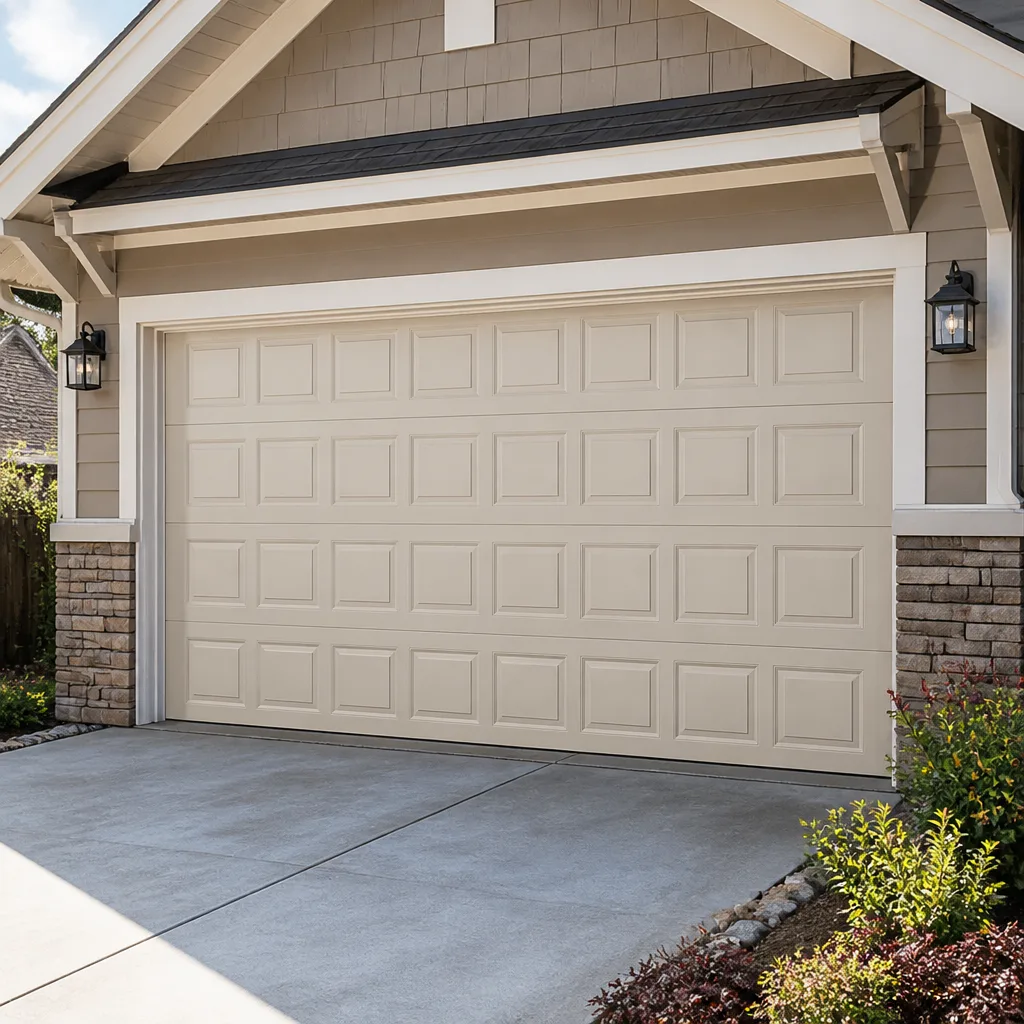 Raised-panel steel
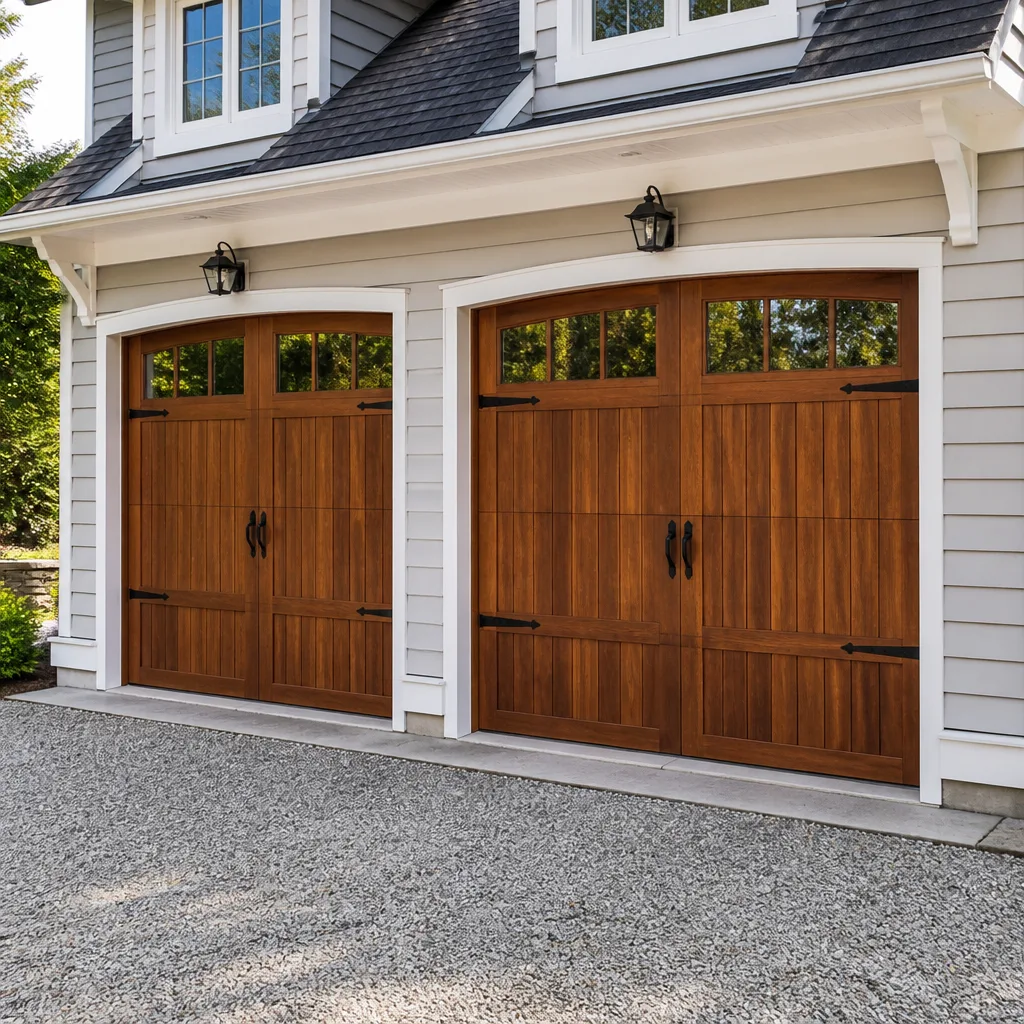 Carriage house
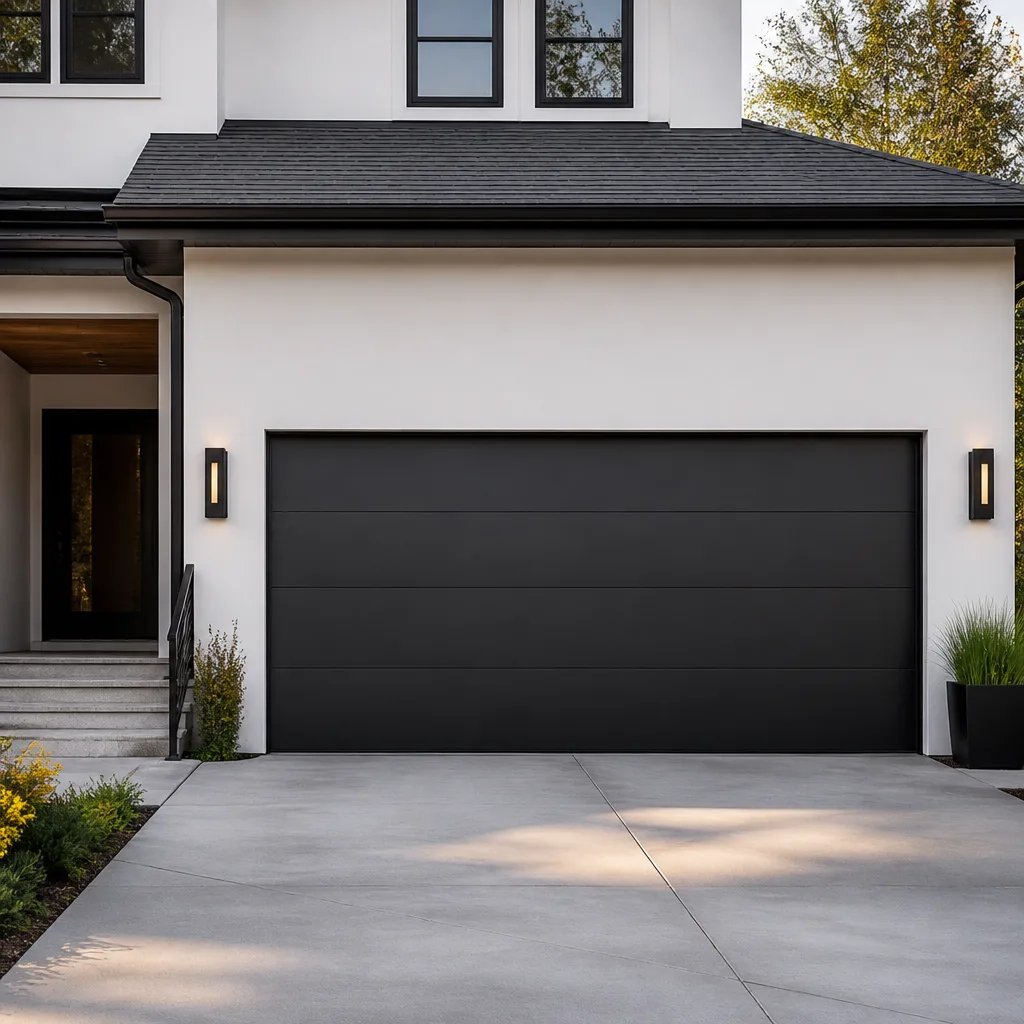 Modern flush
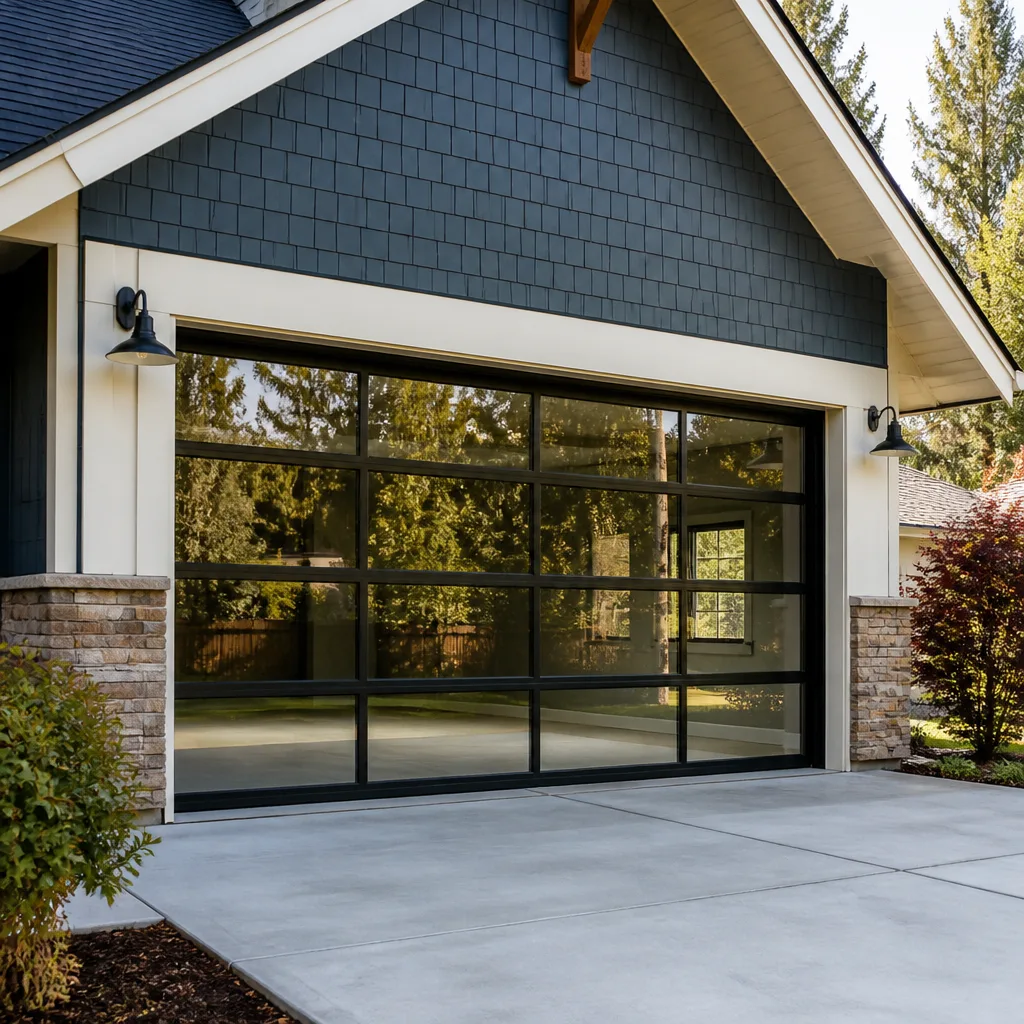 Full-view glass
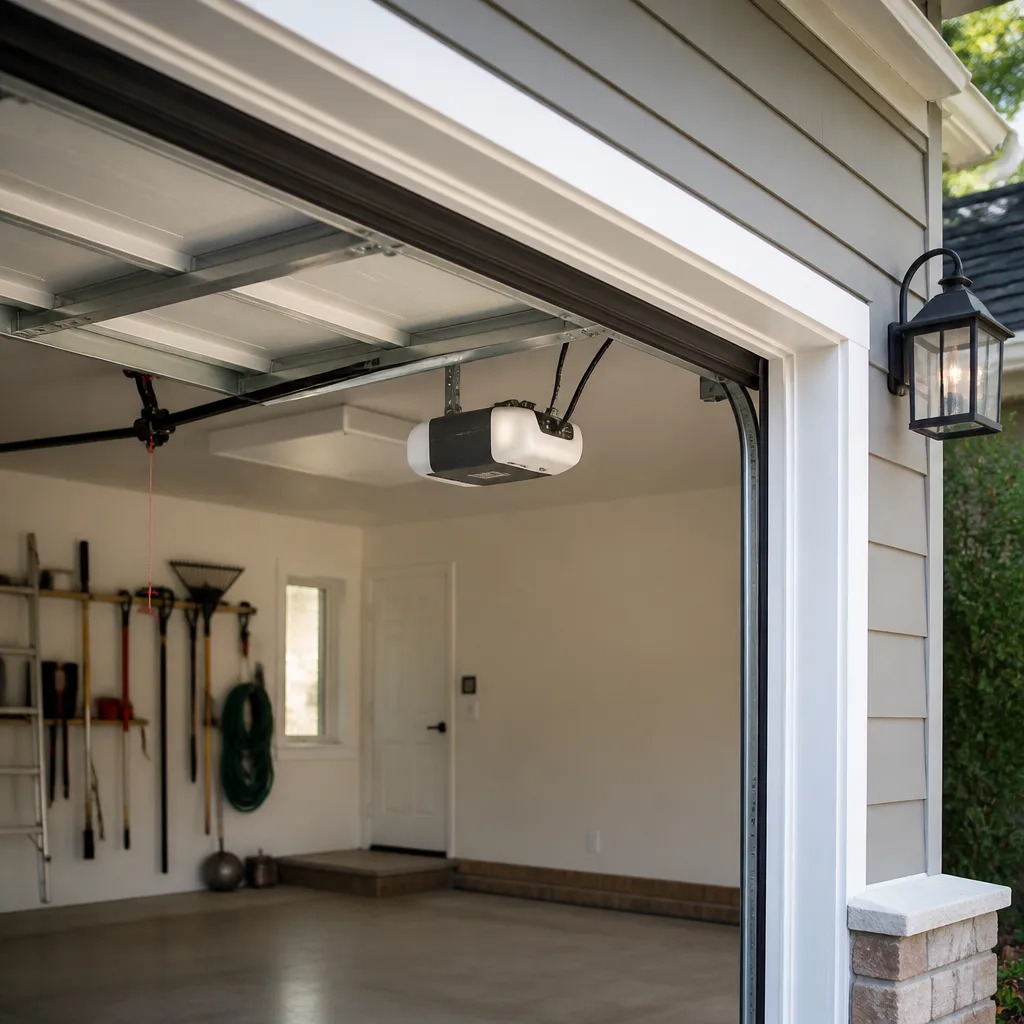 LiftMaster openers
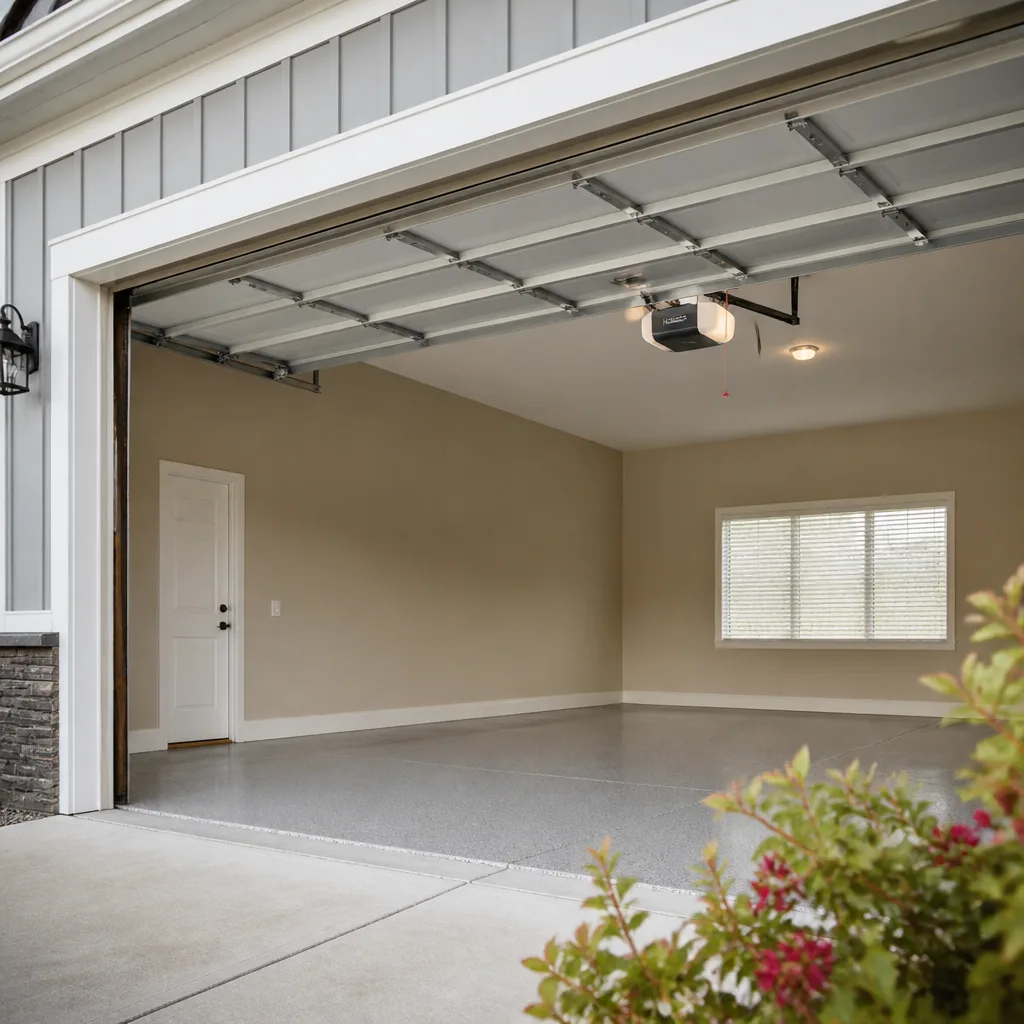 Chamberlain openers
Full 25-point door and opener safety check with every visit - springs, cables, rollers, tracks, and your LiftMaster or Chamberlain opener included
You get a price before we start. It does not change when the pro arrives.
Get your free estimateGarage Door Warning Signs: A Weequahic Homeowner’s Reference Guide
A grinding noise when your door opens isn’t normal aging. It’s usually a roller that’s about to seize, and when it does, it can take the track with it. That turns a small parts fix into a much bigger repair. Most major garage door failures don’t happen out of nowhere. They broadcast warning signs for days or weeks before anything breaks. The trouble is that most homeowners in Weequahic don’t know what they’re hearing or seeing until the door stops moving entirely. This guide decodes those signals by symptom, tells you which component is likely failing, and gives you a straight answer on how urgent the fix really is. Keep it handy. The next time your door sounds wrong, you’ll know whether to monitor it or call.
Quick Answer
The most common garage door warning signs are grinding or squealing noises, jerky or uneven movement, a door that opens partway and stops, visible cable fraying or rust, and gaps in wood panels. Grinding usually points to worn rollers or dry bearings, while a door that moves slowly on one side often signals a failing spring or a stretched cable. Any sign of a snapped or frayed cable, a broken spring, or a door that drops suddenly means stop using it and call a technician before anything else moves.
Styles & brands we work with
- Raised-panel steel
- Carriage house
- Modern flush
- Full-view glass
- LiftMaster openers
- Chamberlain openers
Table of Contents
- The Symptom-to-Cause Matrix: What Each Sound and Sign Tells You
- Urgency Tiers: Stop Now, Schedule This Week, or Monitor
- Opener Problem or Door Problem? How to Tell the Difference
- Spring Warning Signs You Should Never Ignore
- Cable and Roller Warnings: The Parts That Fail Quietly
- Warning Signs Specific to Older Weequahic Doors
- What to Document Before You Call for Service
- Simple Habits That Catch Problems Early
The Symptom-to-Cause Matrix: What Each Sound and Sign Tells You
Every garage door makes some noise. The skill is knowing which noises are routine and which are the sound of something about to fail. Here’s how we break it down for homeowners in Weequahic, based on what we hear and see on service calls.
Sounds and what they usually mean
- Grinding: Worn rollers, dry hinge bearings, or a torsion tube that’s lost lubrication. This is the most common early warning. Left alone, a seized roller can chew into the track, and a track repair costs far more than a roller replacement.
- Squealing or screeching: Metal-on-metal contact, often from hinges or rollers that have dried out. Sometimes it’s the opener’s drive gear or belt. It’s rarely an emergency, but it’s a sign parts are wearing faster than they should.
- Popping or a loud bang: A torsion spring snapping is the classic cause of a single loud bang from the garage. If you hear it and the door won’t lift, the spring has likely failed. Stop and call.
- Banging or rattling: Loose hardware, a door that’s out of balance, or panels that have started to separate. Rattling that gets worse over time often traces back to worn hinges or a track that’s worked itself loose from the wall.
- Clicking that repeats: Often the opener’s logic board or a safety sensor issue. If the door doesn’t move but you hear clicking, the opener is trying to run but something is stopping it.
Behaviors and what they tell you
- Slow on one side: Almost always a spring or cable problem, not the opener. One side is doing more work than the other, and the cable on the weak side is usually stretched or ready to fray.
- Jerky movement: A door that stutters on the way up or down often has a binding track, a bent roller, or a spring that’s lost tension. Jerky motion puts stress on the opener, which is how a door problem turns into an opener problem.
- Opens partway and reverses: This is a safety reversal, usually triggered by a misaligned sensor or an obstruction. It can also mean the door is binding and the opener’s force limit is kicking in.
If any of these sound familiar, a proper diagnosis is the fastest way to know what you’re dealing with. Our Garage Door Repair Weequahic team works on the brand you already have, whether that’s a LiftMaster opener or a Clopay door, so we can trace the symptom to the actual failing part instead of guessing.
Urgency Tiers: Stop Now, Schedule This Week, or Monitor
Not every warning sign means drop everything. Sorting them by urgency helps you decide whether to call today, book a visit soon, or just keep an eye on it. Here’s the tier system we use.
Tier 1: Stop using the door immediately
These are the signs where continuing to run the door risks injury or a much more expensive repair. A garage door is a heavy, spring-loaded system, and the springs and cables are under serious tension. If you see or hear any of the following, leave the door closed and call a technician.
- A snapped torsion spring (usually a loud bang followed by a door that won’t lift)
- A visibly frayed, kinked, or hanging cable
- The door hanging crooked or off one track
- A door that drops suddenly or won’t stay up
- Any grinding that gets noticeably worse within a day
Tier 2: Schedule service within the week
These signs aren’t dangerous yet, but they’re wearing other parts and will get worse. Book a repair before they escalate.
- Grinding or squealing that’s consistent but not severe
- A door that moves unevenly or slowly on one side
- Loose hinges, rattling panels, or a track that’s pulled away from the frame
- An opener that strains or hesitates before lifting the door
- Repeated safety-sensor reversals that aren’t fixed by clearing the path
Tier 3: Monitor and maintain
These are the small things worth watching. They’re not urgent, but keeping an eye on them prevents bigger problems.
- Occasional light squeaking
- Cosmetic rust on hinges or hardware
- A door that’s slightly louder in cold weather
- Minor paint or finish wear on the door panels
If you’re unsure which tier your issue falls into, a quick call settles it. Emergency garage door service exists for exactly the Tier 1 situations, and our garage door repair service handles the Tier 2 work before it becomes an emergency.
Opener Problem or Door Problem? How to Tell the Difference
This is the most common misdiagnosis we see. A homeowner decides the opener is dead and replaces it, when the real problem was a cable or spring all along. The opener is often the innocent party. Here’s how to work out which side of the system is failing before you spend money on the wrong fix.
The pull-the-release test
Every opener has a manual release cord. With the door closed, pull the release to disconnect the opener from the door, then try to lift the door by hand.
- If the door lifts smoothly by hand: the door and its springs are fine. The problem is in the opener or the drive system, and opener repair is the right call.
- If the door is heavy, jerky, or won’t stay up: the springs, cables, or balance are off. That’s a door problem, and replacing the opener would just strain a new unit on a broken door.
Signs that point to the opener
- The door works by hand but nothing happens when you press the button
- The opener runs but the door doesn’t move (drive gear or chain issue)
- The wall button works but the remote doesn’t (remote or receiver issue)
- The lights flash but the door doesn’t move (safety sensor or logic board)
Signs that point to the door
- The door lifts but strains, and the opener sounds labored
- The door moves slowly on one side
- You hear a bang and the door won’t lift
- The door binds halfway and the opener reverses
A worn drive gear inside a Chamberlain or Genie unit is a real failure, and it’s common enough that we see it often. But it’s also common for a homeowner to replace a perfectly good opener when a $40 cable repair was the actual fix. Our garage door opener repair service starts with a diagnosis for exactly this reason. Get it fixed right the first time, on the part that’s actually failing.
Spring Warning Signs You Should Never Ignore
Springs are the most dangerous part of any garage door. A torsion spring is under heavy tension, and when it fails, it releases that energy at once. That’s why spring work is a job for a trained technician, not a weekend project. We can tell you what to watch for, but we won’t walk you through touching one yourself.
What a failing spring looks like
- A visible gap: On a torsion spring, a clean gap in the coil often means it has snapped. On extension springs, look for a stretched or separated spring along the track.
- A door that feels extremely heavy: If the door won’t lift easily by hand after you release the opener, the spring has lost tension.
- A loud bang from the garage: A single sharp bang is the classic sound of a torsion spring failing.
- A door that opens a foot and stops: The opener can’t lift the weight without spring help, so it gives up partway.
- A door that won’t stay closed: Weak springs can’t counterbalance the door, and it drifts up.
Why springs fail
Springs are rated for a number of open-and-close cycles, and every door in Weequahic racks those up over years of daily use. Cold snaps and damp stretches of weather can make an already-weakened spring fail sooner. When one spring snaps on a two-spring door, the second spring is usually carrying double the load, so both should be replaced together. We quote spring repair per spring for that reason, and we’ll be upfront about whether one or two need replacing.
If the symptoms above sound like your door, stop using it and call. Our spring repair service is a dedicated offering because this is one of the most safety-critical jobs in the trade. The local pro who comes out is licensed and insured as the state requires, and the price is agreed before any work starts.
Cable and Roller Warnings: The Parts That Fail Quietly
Cables and rollers don’t fail with a bang. They wear out slowly and give you plenty of signals if you know where to look. The trouble is most homeowners don’t look until something breaks. Here’s what to check from a safe distance, with the door closed and the opener disconnected.
Cable warning signs
- Fraying: Look at the cables running along each side of the door. A cable that’s started to fray, kink, or look like it’s untwisting is a stop-now sign.
- Rust: Rust on the cable itself, especially near the drum at the top, is a sign the cable has been exposed to moisture and is weakening. Rusted cables can fail without warning, so treat them as urgent.
- Sagging: A cable that looks loose or slack when the door is down has likely jumped its drum.
- Uneven lift: If one side lags, the cable on that side is stretched or slipping.
Roller warning signs
- Grinding or squealing: Worn rollers are the most common cause. Left alone, they can score the track.
- Visible flat spots or cracks: Look at the rollers where they meet the track. Nylon rollers can crack, and steel rollers can flat-spot.
- A wobbly door: Worn rollers let the door shift slightly side to side as it moves. That wobble wears the hinges and the track.
If your rollers are grinding, the honest fix is usually to replace them as a set. Replacing one roller and leaving the rest is a false economy, because the worn rollers keep dragging on the track. This is exactly the kind of repair we handle through garage door repair, and it’s worth doing before a seized roller bends the track.
Warning Signs Specific to Older Weequahic Doors
Weequahic has a lot of older homes, and older doors carry a specific set of warning signs that newer doors don’t. A wood-panel door that’s been through decades of hot summers and cold winters will show wear in ways a modern steel or aluminum door won’t. Here’s what to watch for on a Weequahic door that’s been around a while.
Wood panel delamination
Delamination is when the layers of a wood-composite door start to separate. It can look cosmetic at first: a slight bubbling or peeling along a panel edge. But delamination means moisture has gotten inside the panel, and that’s a structural problem, not a paint problem. A delaminated panel is weaker, holds water, and can eventually separate from the frame. If you see bubbling or separation on a wood door, it’s worth having it looked at before it fails.
Rust patterns on hardware and cables
New Jersey’s humid summers and freeze-thaw winters are hard on metal hardware. Surface rust on hinges is normal wear. But rust on the cables, the springs, or the track is a different story. Rust on a cable means the inner strands are weakening, and that’s a Tier 1 warning. Check the cables and springs when the weather turns, because that’s when failing parts tend to show themselves.
Track and hardware looseness
On an older door, the lag bolts holding the track to the frame can work loose over years of vibration. A track that’s pulled away from the wall lets the door wobble, and that wobble wears everything else. If your older Weequahic door rattles more than it used to, check whether the track is still tight against the frame.
Balance and spring age
An older door with its original springs is living on borrowed time. If the door feels heavy or the springs look tired, have them checked. And if the door itself has structural damage that can’t be repaired, a new installation is often the better long-term call. Our garage door installation service covers the full replacement, and we work on major manufacturers like Clopay, Amarr, Wayne Dalton, and Raynor, so you’re not stuck with whatever a big-box store happens to stock.
What to Document Before You Call for Service
The difference between a ten-minute diagnosis call and a forty-minute one is usually what the homeowner can show us. A short video and a couple of photos let a technician figure out what’s wrong before anyone gets in a truck. Here’s what to capture.
- Film the door moving. Stand back and record one full open and one full close. Capture the whole door and the tracks. The way it moves tells us a lot: whether it’s binding, whether one side lags, whether it stutters.
- Photograph the springs. Take a clear photo of the torsion spring above the door (or the extension springs along the tracks). A snapped spring is visible in a photo.
- Photograph the cables. Get a shot of each cable where it meets the drum at the top of the door and where it attaches at the bottom. Fraying and rust show up clearly in photos.
- Note the opener brand and model. The label is usually on the back or side of the motor housing. Tell us whether it’s a LiftMaster, Chamberlain, Genie, Craftsman, or another brand, so we come prepared.
- Describe the sound in words. “Grinding” and “squealing” point to different parts. Say whether the noise happens on the way up, the way down, or both.
- Note when it started and whether it’s getting worse. A grinding that’s been there for a month is different from one that started yesterday. Both matter, but the timeline changes the urgency.
With that information in hand, the diagnosis call is quick. We can tell you what’s likely failing, what it usually costs, and whether it’s safe to keep using the door in the meantime. That’s a better conversation than “it’s making a noise.”
Simple Habits That Catch Problems Early
The best time to catch a warning sign is before it becomes a failure. A few small habits keep a Weequahic garage door running longer and give you early notice when something’s off.
- Listen for changes. Get familiar with how your door normally sounds. A new noise is a signal. It’s easy to tune out a grinding sound once you’ve heard it a few times, but that’s exactly when to pay attention.
- Watch it move. Once a month, watch the door go up and down. Look for wobble, uneven movement, or a door that hesitates.
- Test the safety reversal. Put a small object in the door’s path and confirm the door reverses when it meets it. If it doesn’t, the sensors or the opener’s force setting need attention.
- Look at the cables and springs. With the door closed and the opener disconnected, do a visual check from a safe distance. You’re looking for fraying, rust, gaps, or looseness.
- Keep the tracks clean. Wipe the tracks down and check that the door runs smoothly. Don’t lubricate the tracks themselves, since that attracts grit; the rollers and hinges are what need occasional attention.
- Check after extreme weather. A cold snap or a run of humid days can push a weakening part over the edge. A quick look after a weather change catches problems early.
These habits won’t prevent every failure, but they’ll catch most of them while they’re still small. That’s the difference between a quick repair and an emergency call.
Common Mistakes to Avoid
- Blaming the opener first. When a door won’t lift, the opener gets the blame, but a heavy door usually means a spring or cable problem. Replacing a working opener on a broken door just strains the new unit, and a release test settles which side is failing in seconds.
- Running a door with a frayed cable. A cable under tension that’s already fraying can snap without warning. It’s not worth the risk, especially in a Weequahic home where humidity speeds up rust on cables that look fine one day and fail the next.
- Ignoring grinding because it’s “just noise.” Grinding is the sound of metal wearing metal. Left alone, a seized roller can score the track, so a small roller replacement becomes a track repair.
- Replacing one spring on a two-spring door. When one spring fails, the second is carrying double the load and usually isn’t far behind. Replacing both together is the sound choice, and it’s cheaper than two separate visits.
- Painting over delaminated wood panels. Delamination looks cosmetic, but it’s a structural sign that moisture has gotten inside. Painting over it traps the moisture and lets the panel fail quietly until it separates from the frame.
- Doing spring or cable work yourself. These parts are under extreme tension, and a mistake can cause serious injury. This is the one part of a garage door that’s genuinely not a do-it-yourself job, and a trained technician has the tools and the experience to do it safely.
- Waiting until the door won’t open. A door that’s been shutting out warning signs for weeks usually fails at the worst possible time. Catching the early signals gives you time to schedule a repair instead of calling for an emergency.
See the difference
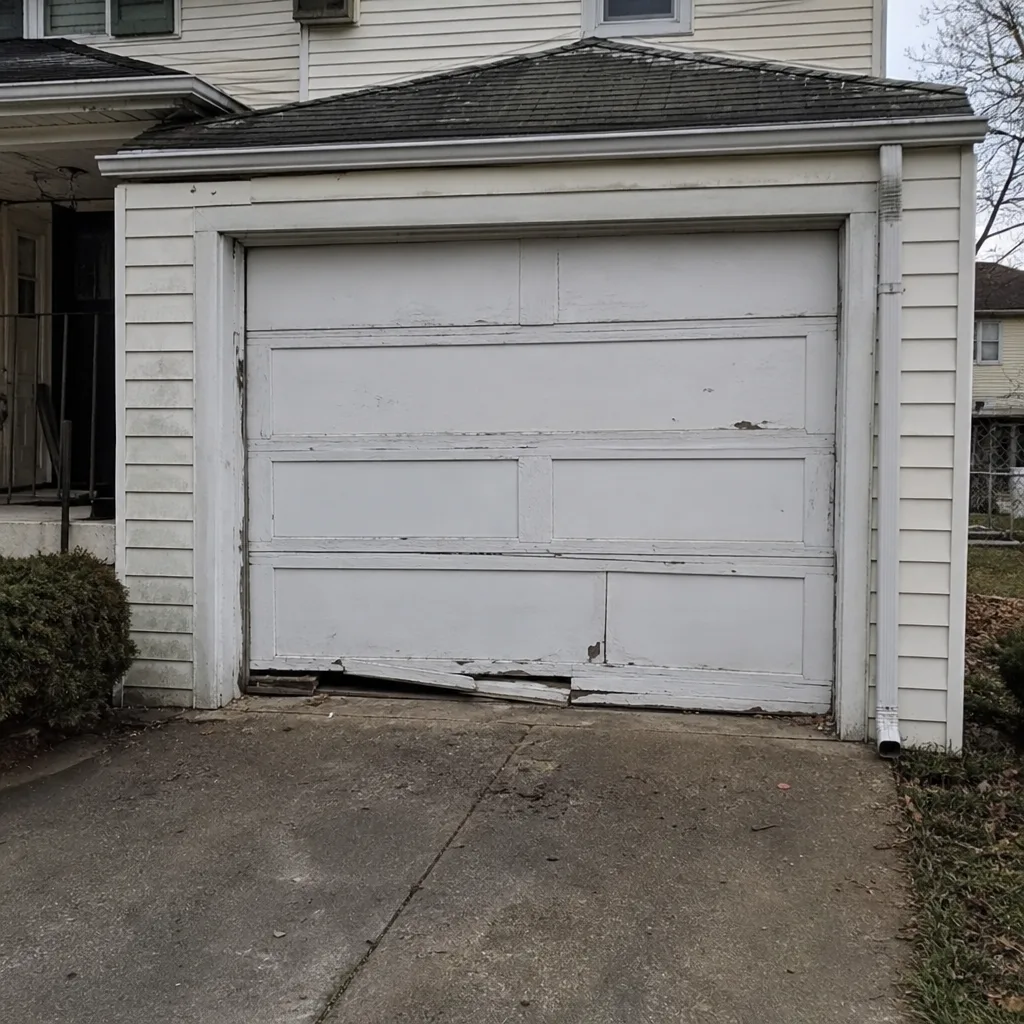 Before
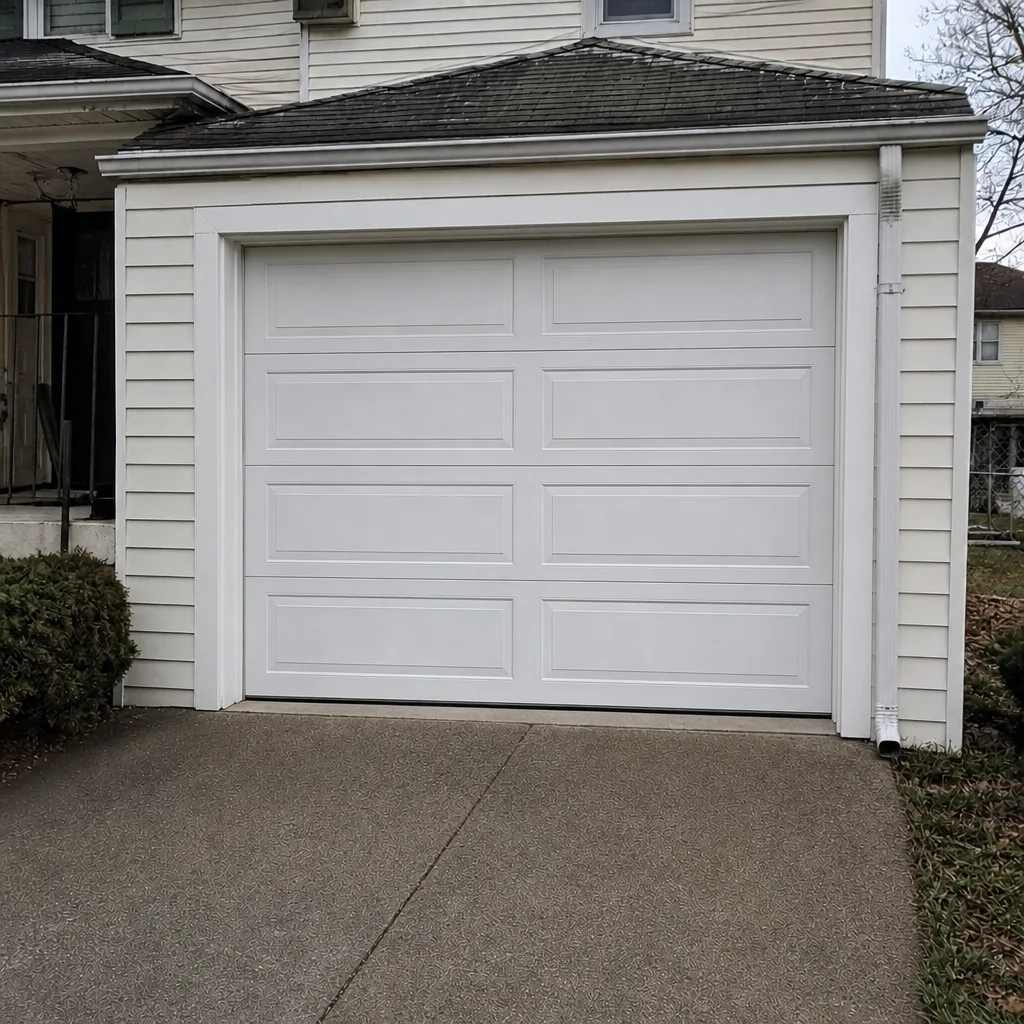 After
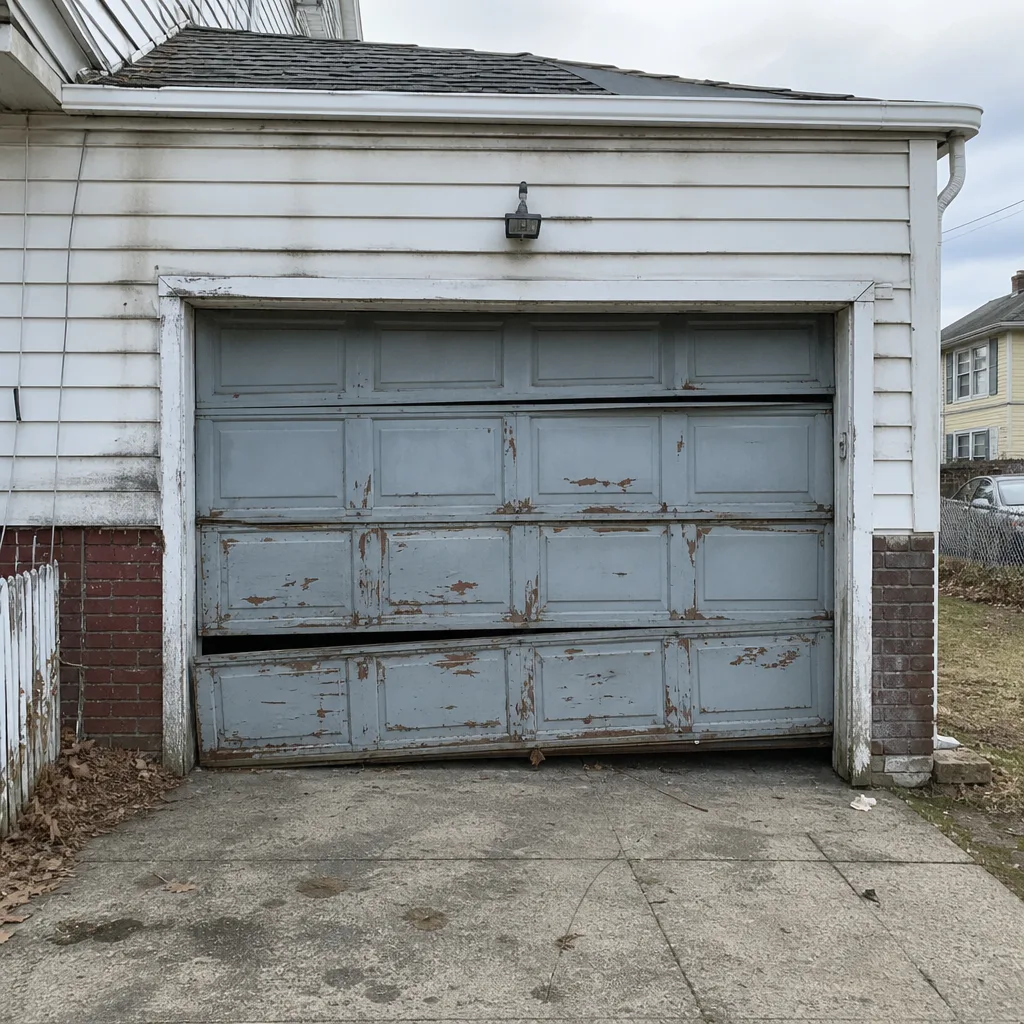 Before
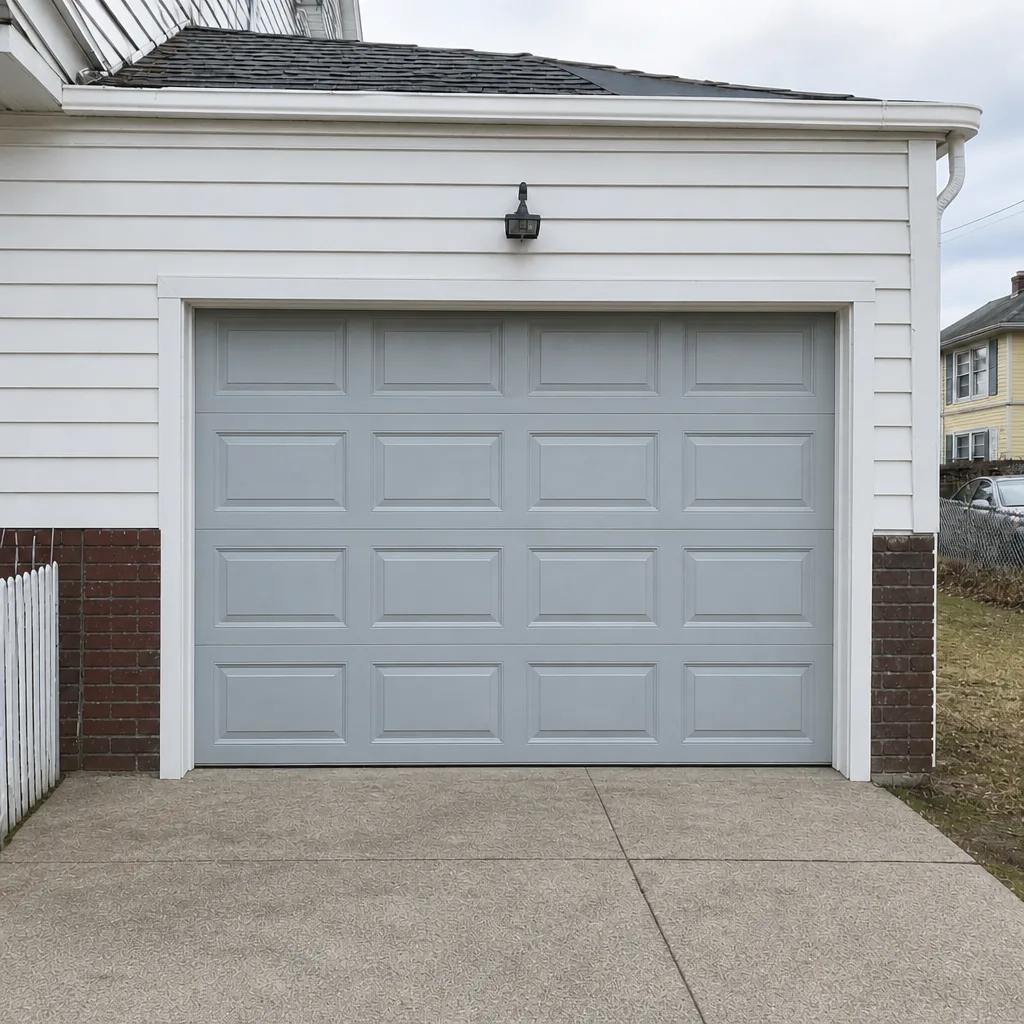 After
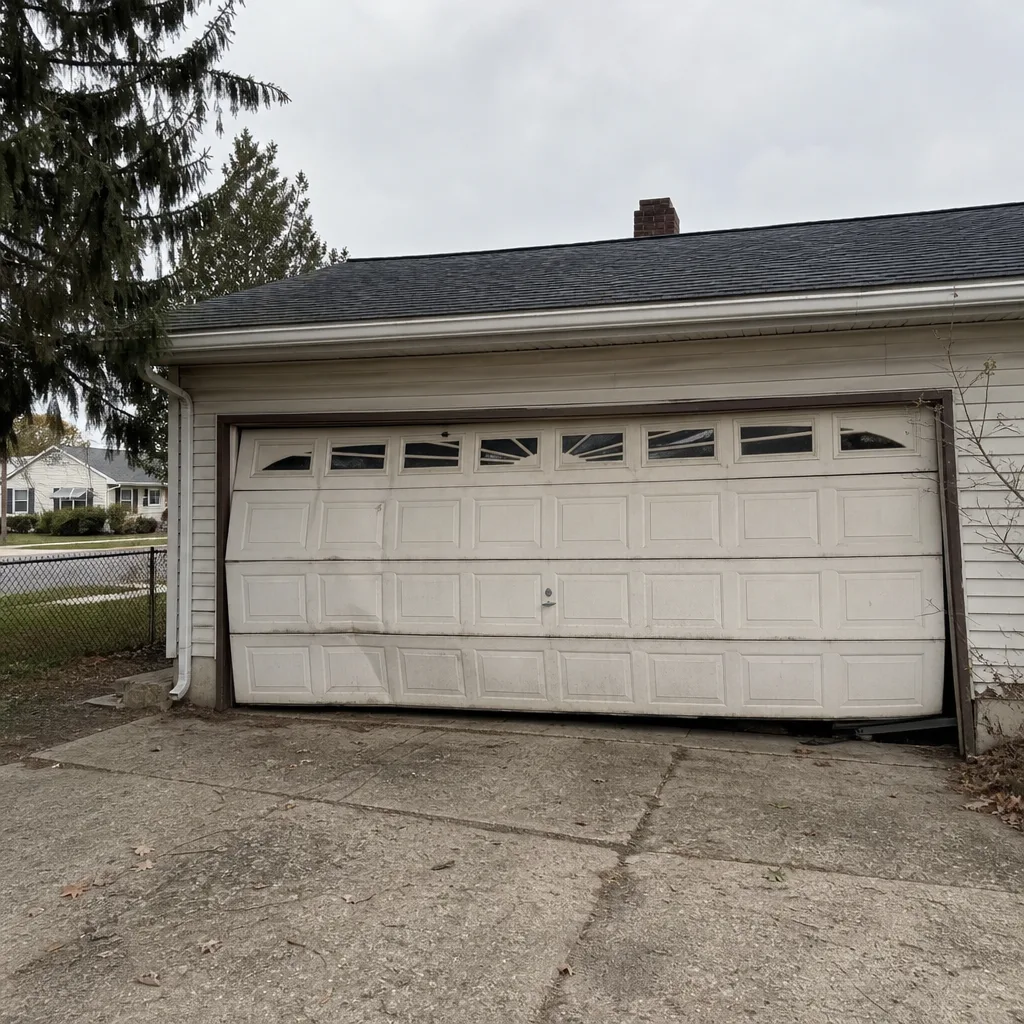 Before
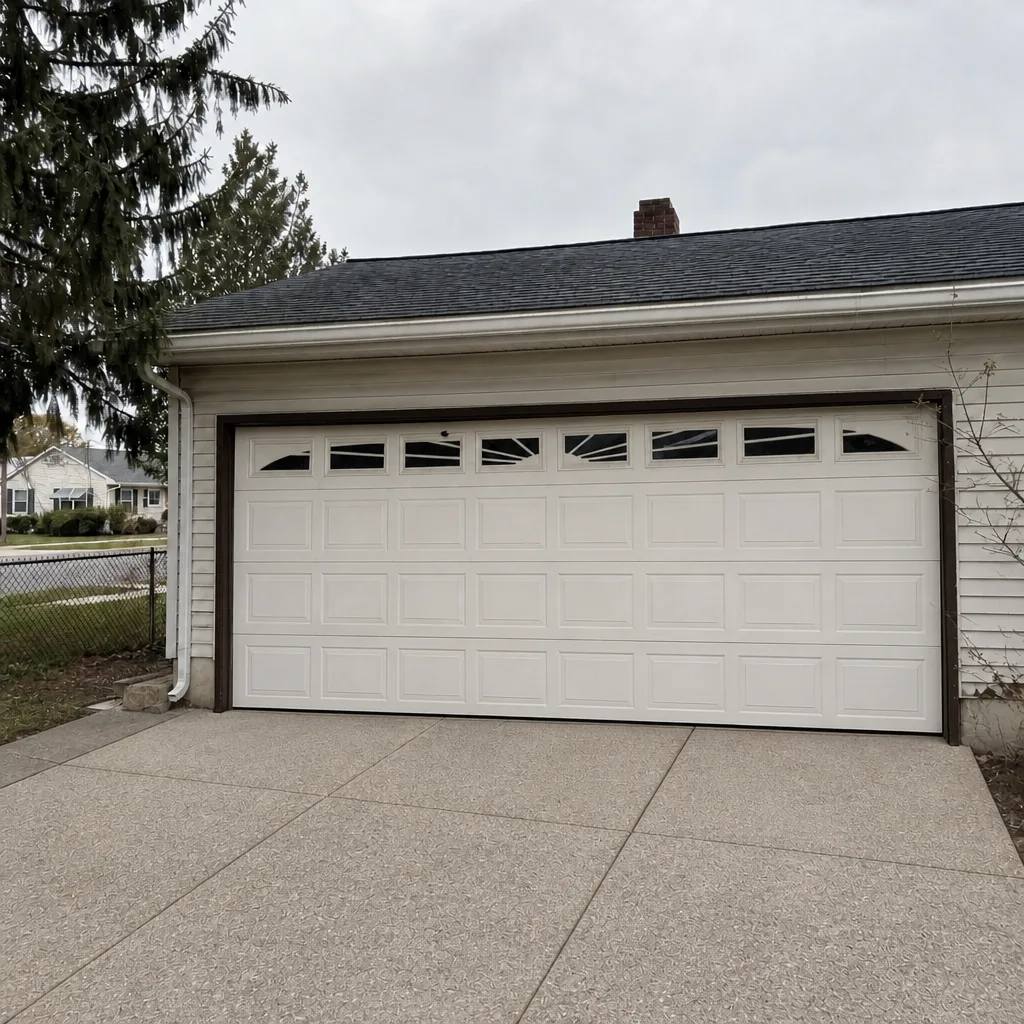 After
When to Call a Professional
Some of this you can check yourself, and some you shouldn’t touch. Call a professional if you see a snapped or frayed cable, a broken or visibly weakened spring, a door hanging off its track, or any grinding that’s getting worse. Call if the door drops suddenly, won’t stay up, or reverses on its own. And call if you’re simply not sure whether the problem is the door or the opener; the release test tells you which side is failing, and a diagnosis settles it. Garage Door Repair Weequahic offers free estimates in Weequahic, and we can work with your schedule for a repair. Our technicians have up to 8 years of experience, and we handle everything from a spring repair to a full new installation. Call (833) 508-9169 and we’ll set it straight.
Frequently Asked Questions
The earliest signs are usually a grinding or squealing noise, a door that moves unevenly or slowly on one side, and visible wear on rollers or hinges. Grinding typically points to worn rollers or dry bearings, and uneven movement usually means a spring or cable is weakening. Catching these early lets you schedule a repair instead of calling for an emergency.
Pull the manual release cord to disconnect the opener, then try to lift the door by hand. If it lifts smoothly, the door and springs are fine and the opener is the problem. If it feels heavy or won’t stay up, the springs or cables are the issue. Call (833) 508-9169 for a free estimate and we’ll confirm which part is failing before you spend anything.
A grinding noise itself isn’t usually an immediate danger, but it’s a clear sign that a roller or bearing is wearing and could seize. Left alone, a seized roller can score the track and turn a small fix into a bigger repair. If the grinding is getting worse quickly, treat it as urgent and call for a diagnosis.
A door that moves slowly or unevenly on one side almost always has a spring or cable problem, not an opener problem. One side is doing more work than the other, which means the weakening part on the lagging side is being overloaded. This is a sign to schedule service soon, before it fails completely.
Older Weequahic doors often show wood panel delamination, rust on cables and springs from humid summers and freeze-thaw winters, and loose track hardware from years of vibration. Delamination is the one that looks cosmetic but signals structural failure. If you see bubbling or separation on a wood panel, have it looked at before it fails.
A loud popping or banging sound from the garage often means a torsion spring has snapped. If you hear that and the door won’t lift, stop using the door immediately. The spring is under extreme tension and the door is no longer safely balanced, so call a technician before you try anything else. Call (833) 508-9169 and we’ll get a pro out to assess it.
The Bottom Line
Your garage door tells you what’s wrong long before it stops working. Grinding points to rollers, uneven movement points to springs and cables, and a loud bang usually means a spring has already failed. The trick is sorting what’s urgent from what can wait. Stop using the door for snapped springs, frayed cables, and any sudden drop. Schedule a repair within the week for grinding, uneven movement, and loose hardware. Monitor the small stuff. And before you call, take a short video and a few photos. It makes the diagnosis fast and the fix accurate. We handle repair, opener repair, spring repair, and installation on the brands you already own, and we quote every job before any work starts.
The next time your door sounds off, don’t wait for it to fail. Call Garage Door Repair Weequahic at (833) 508-9169 for a free estimate. We’ll tell you what’s wrong, how urgent it is, and what it’ll cost, and the written estimate sets the price before any work begins. Same-day and emergency service is available for the cases that can’t wait, and our technicians have up to 8 years of experience with everything from a stubborn roller to a full new door.
Written by the team at Garage Door Repair Weequahic.