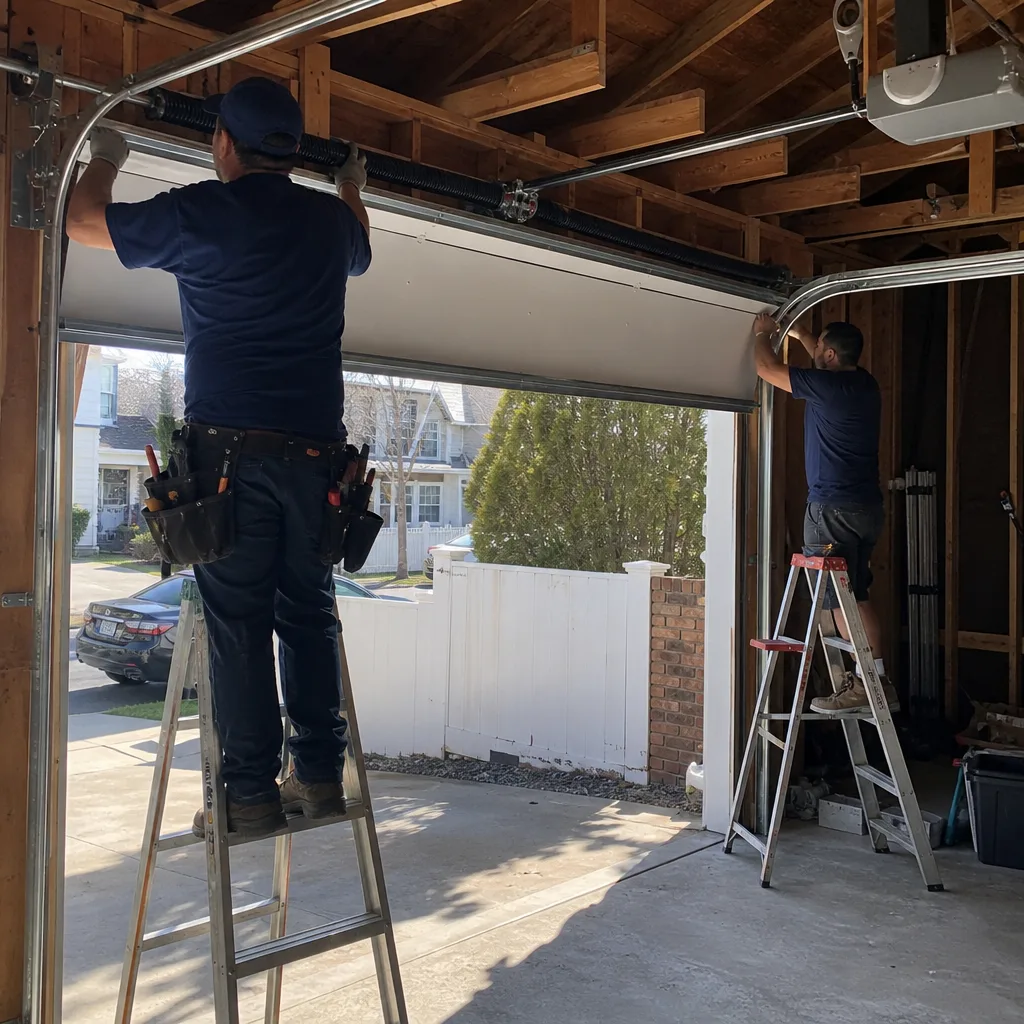
Last updated November 23, 2026
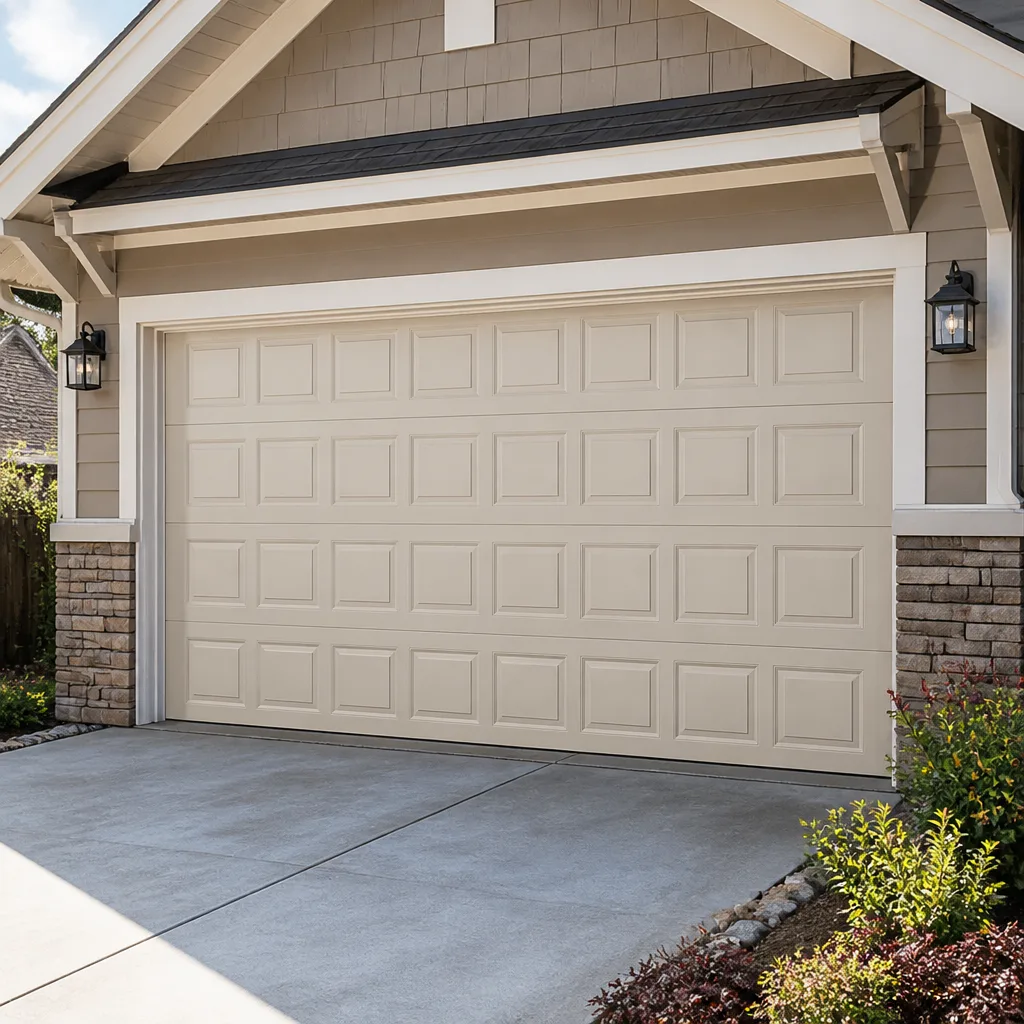 Raised-panel steel
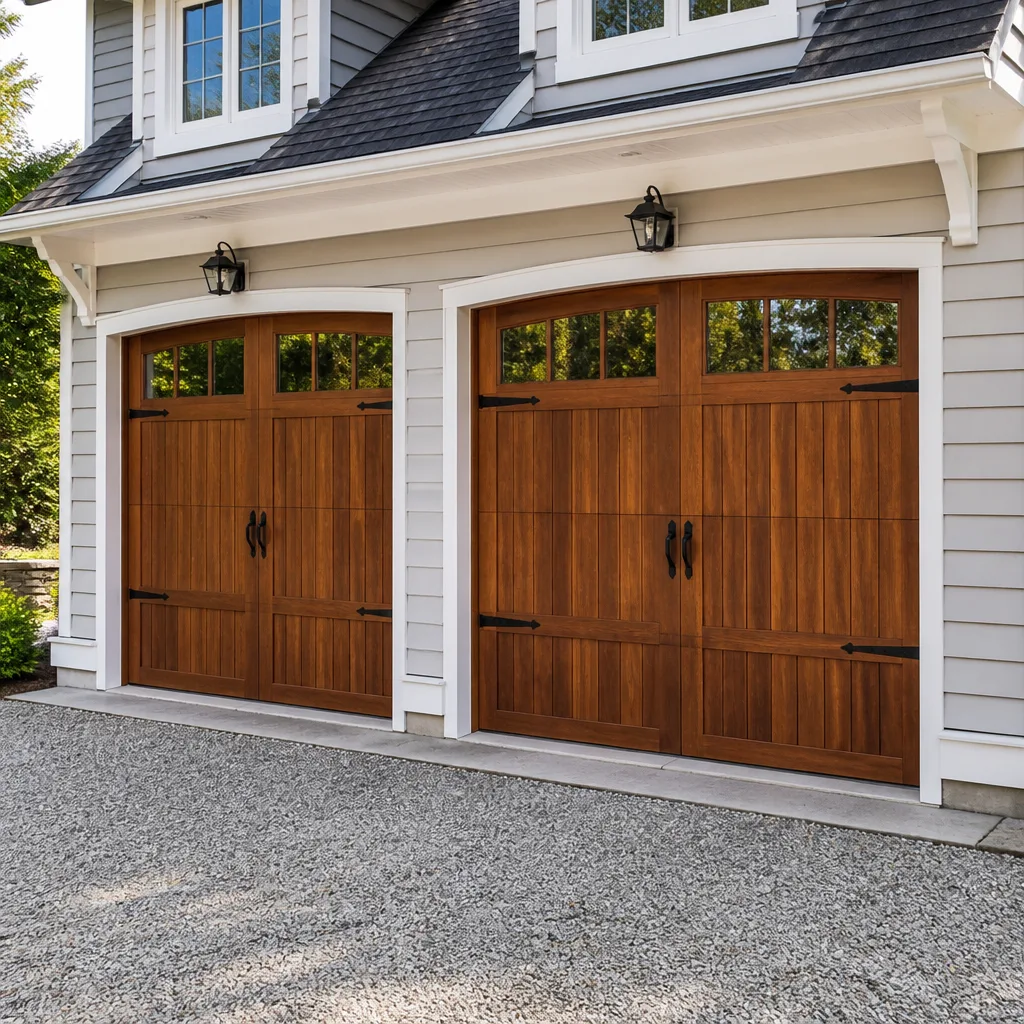 Carriage house
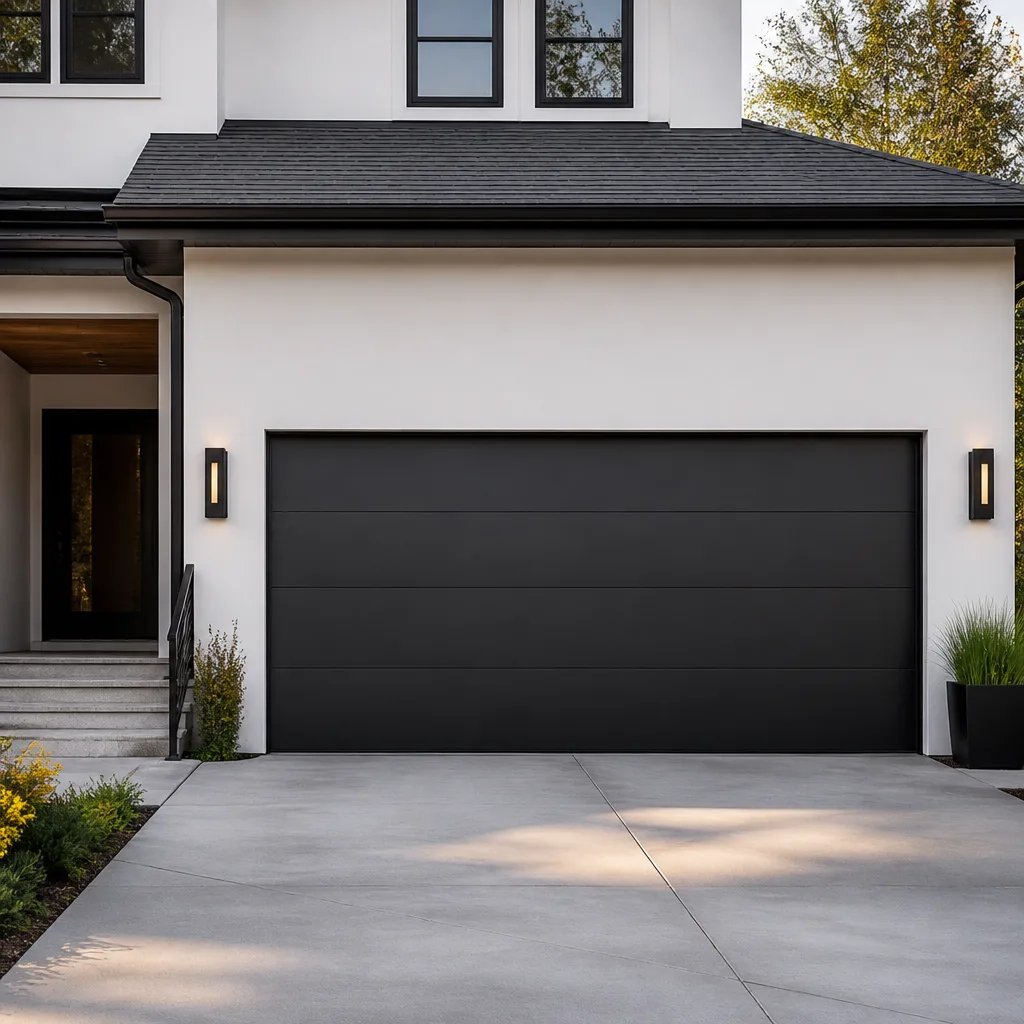 Modern flush
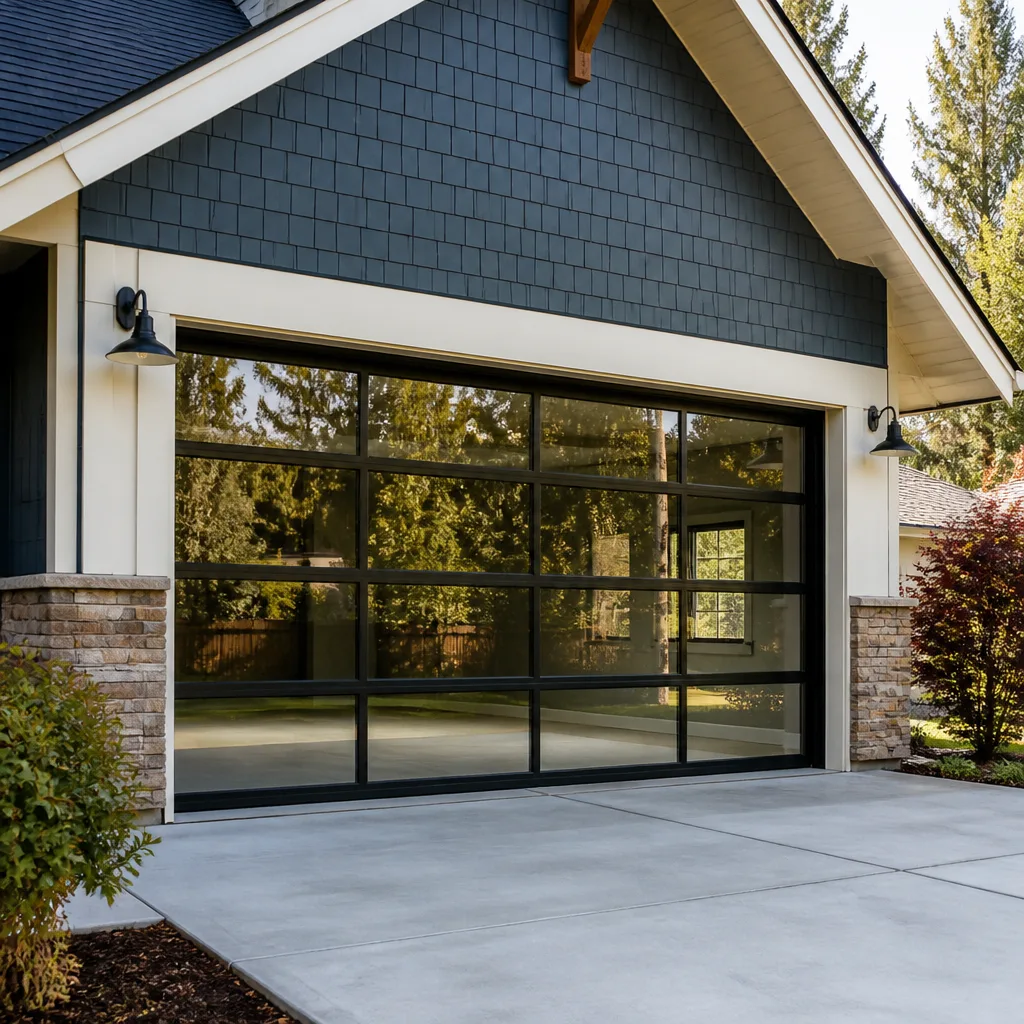 Full-view glass
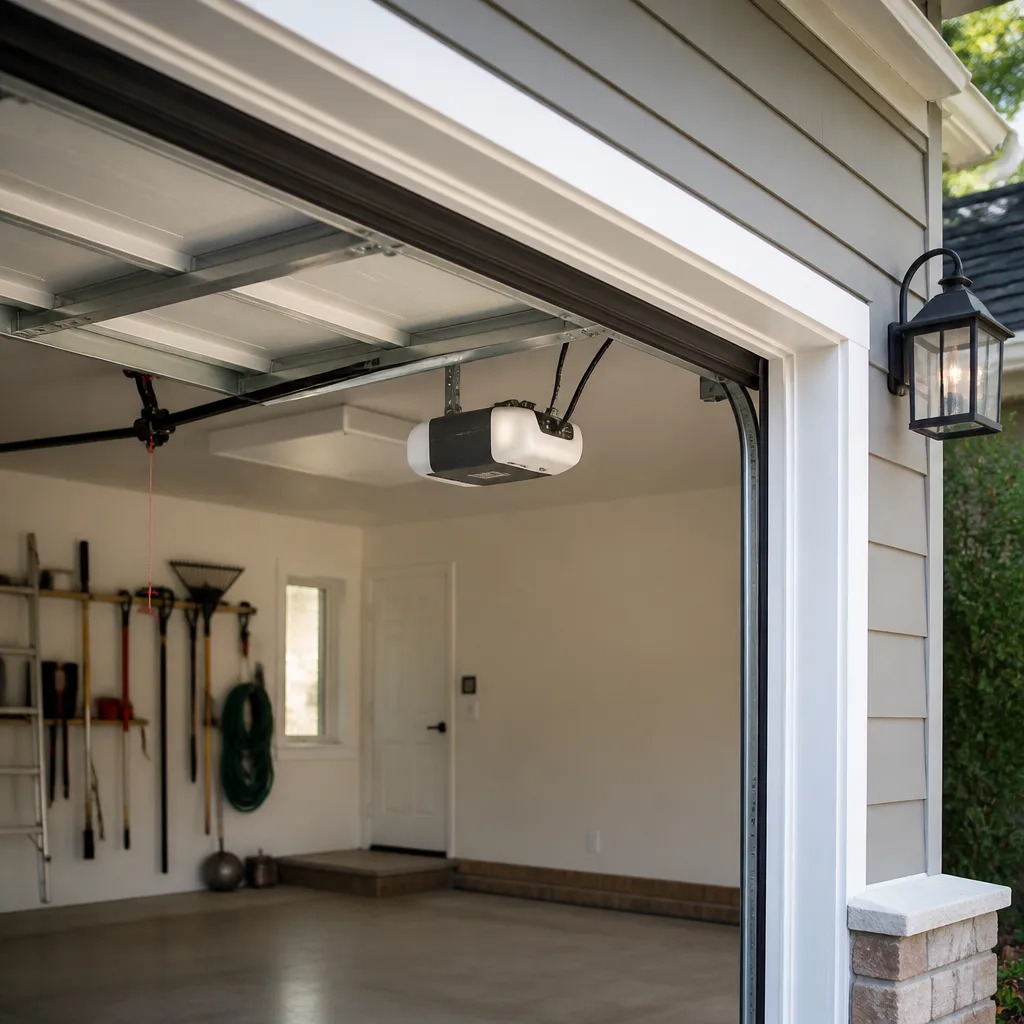 LiftMaster openers
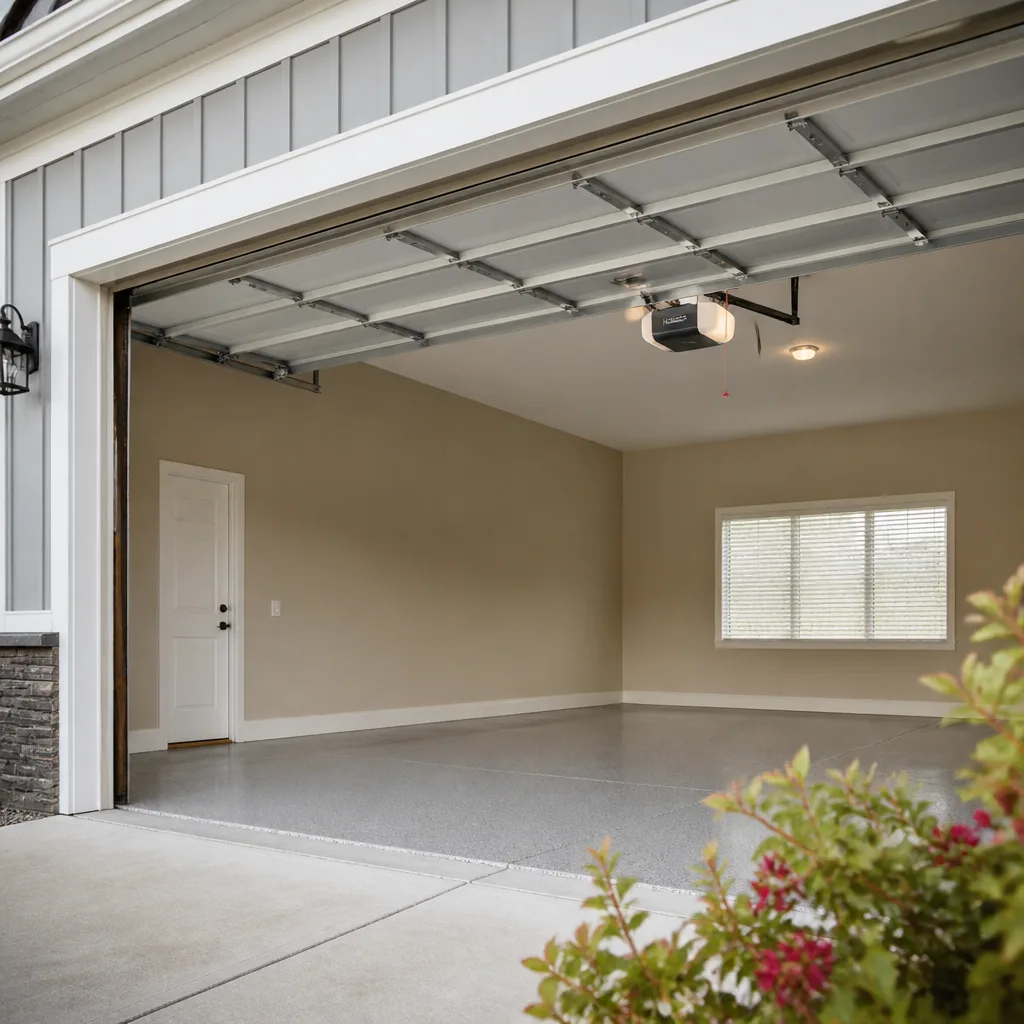 Chamberlain openers
Full 25-point door and opener safety check with every visit - springs, cables, rollers, tracks, and your LiftMaster or Chamberlain opener included
You get a price before we start. It does not change when the pro arrives.
Get your free estimateGarage Door Repair Troubleshooting in Weequahic: Common Problems and How to Fix Them
If your garage door is acting up, there’s a 70% chance the opener isn’t the problem. It’s just the messenger taking the blame for a failing spring, a worn roller, or a track that’s slipped out of alignment. Most homeowners in Weequahic start troubleshooting at the wall button and the opener housing, pushing the remote, resetting the unit, and wondering why nothing changes. That order is backwards. The door is a mechanical system first and an electronic one second, and when you read the door’s behavior before you touch a single button, the real fault usually announces itself. This guide walks you through that reversed order: how to trace a symptom to its actual source, how to run the two balance checks most DIY guides skip, and exactly where to stop and call a professional. By the end, you’ll know what your door is telling you and what to do about it.
Quick Answer
Most garage door problems in Weequahic trace back to the mechanical system, not the opener: a weak or broken spring, worn rollers, a misaligned track, or a cable under the wrong tension. Start by disconnecting the opener and testing whether the door balances by hand. If it won’t hold its position or feels dangerously heavy, the springs or cables are the issue and the job needs a trained professional. If the door moves freely by hand but the opener won’t run it, the fault is electrical or in the opener itself.
Styles & brands we work with
- Raised-panel steel
- Carriage house
- Modern flush
- Full-view glass
- LiftMaster openers
- Chamberlain openers
Table of Contents
- Diagnosis First: Why the Opener Gets the Blame
- How to Read Your Door’s Behavior as Clues
- The Spring Tension Test vs. the Balance Test
- Why Resetting Your Opener Never Fixes a Mechanical Failure
- How Weequahic’s Seasonal Temperature Swings Affect Your Door
- The Six Failures We See Most and How Each One Is Traced
- The Stop-Here List: Symptoms That Mean Hands Off
Diagnosis First: Why the Opener Gets the Blame
The opener is the loudest, most visible part of the system. It’s the thing that hums, clicks, and lights up. So when the door stops working, that’s where attention goes. But the opener’s job is narrow: it lifts and lowers a door that’s already balanced by springs and guided by tracks and rollers. When the balance is off, the opener strains against a load it was never designed to carry. It might still be working perfectly while the door fails.
Here’s the reversal we want you to make. Before you touch the remote or the control panel, walk out and look at the door itself. How does it sit in the frame? Does it look crooked? Are the panels level? Run your eyes down both tracks. Then, with the opener disconnected, feel how the door moves by hand. That single sequence tells you more than an hour of button-pressing.
In our experience, this is where most Weequahic homeowners get stuck. They’ve replaced batteries, reprogrammed remotes, and power-cycled the opener, and the door still jerks or stalls. The reason is simple: none of those steps address a spring that’s lost tension or a roller that’s seized. You can’t reset your way out of a mechanical problem. Once you accept that, troubleshooting becomes a matter of elimination rather than guesswork.
The practical rule: if the door moves unevenly, slowly, or with a grinding sound, treat it as a mechanical fault first. If it moves smoothly by hand but the opener won’t respond, then you’re looking at an electrical or opener problem. That fork in the road is where every real diagnosis begins. Homeowners who reach for Garage Door Repair Weequahic after a few failed resets usually find the answer in under a minute once a technician reads the door’s behavior.
How to Read Your Door’s Behavior as Clues
A garage door doesn’t fail silently. It gives you a symptom, and each symptom points to a specific component. Learning to read the behavior is the single most useful diagnostic skill you can build. Here’s how the common patterns map to causes.
- Door rises a few inches, then stops. Almost always a spring that’s lost tension or a safety sensor that’s misaligned. The opener is being told to stop, or it’s straining against a load it can’t lift.
- Door jerks or shudders as it moves. Worn or seized rollers, or a track with a bend in it. The door is catching on something as it travels.
- Door is slow and labored. Spring tension is fading, or the opener’s drive gear is wearing down. On a Chamberlain or Genie unit, a straining motor often points to the door, not the motor.
- Door is loud, with grinding or squealing. Dry or worn rollers, or a torsion tube that needs attention. Metal-on-metal noise is the system telling you it’s under-friction.
- Door hangs crooked, one side higher. A broken spring on one side, a snapped cable, or a track that’s pulled loose from the wall.
- Door reverses immediately after touching the floor. The safety sensors or the travel limits are out of adjustment, or the door is binding at the bottom.
Notice that four of those six point at the mechanical system, not the opener. That’s the pattern we see across Weequahic: the door’s behavior is a symptom, and the opener is just reporting it. A crooked door is never the opener’s fault. A jerky door is never the opener’s fault. A loud door is rarely the opener’s fault.
When you’ve identified the symptom, you’ve narrowed the search to two or three components. That’s when a professional can finish the diagnosis quickly and give you a straight answer about what needs replacing. If the symptom is a jerk or a grind, you’re almost certainly looking at garage door repair rather than a new opener.
The Spring Tension Test vs. the Balance Test
These are the two checks most DIY guides skip entirely, and they’re the two that actually tell you whether the door is mechanically sound. They’re different tests with different purposes, and together they separate a spring problem from an opener problem.
The Balance Test
The balance test checks whether the springs are holding the door’s weight. It’s the safer of the two and the one we recommend every homeowner learn.
- Close the door fully and disconnect the opener from the door, usually by pulling the release cord. Pull it with the door closed so the door doesn’t drop.
- Lift the door by hand to about halfway. It should move with light, even effort.
- Let go. A properly balanced door holds its position at roughly halfway. A door that drops, or that needs two hands and real effort to lift, has a spring problem.
The balance test never requires you to touch a spring or a cable. It’s a hands-only check that answers the question: are the springs doing their job?
The Spring Tension Test
The spring tension test is about the springs themselves, and this is where we draw a hard line. You can look at a torsion spring above the door and see whether it’s intact: a snapped spring shows an obvious gap or a separated coil. On an extension spring mounted along the track, a broken spring is visible too. But looking is where the homeowner’s involvement ends.
Torsion springs and the cables they tension are under enormous stored force. Adjusting them, winding them, or trying to take tension off them can cause serious injury. The spring tension test, for a homeowner, is a visual inspection only. If a spring is broken, separated, or looks stretched past its coil, stop and call a professional. Do not attempt to wind, unwind, or replace it yourself. Our technicians have up to 8 years of experience and treat spring repair with the caution it requires, which is exactly why we offer it as a dedicated service rather than a side job. If your balance test fails and a spring is visibly broken, that’s a spring repair call, not a DIY project.
Why Resetting Your Opener Never Fixes a Mechanical Failure
Resetting the opener is one of the first things every homeowner tries, and for a good reason: sometimes it works. But it works only in a narrow set of situations, and understanding which ones saves you hours of frustration.
A reset helps when the opener’s logic board has lost its memory, its travel limits, or its pairing with the remote. That happens after a power surge, a battery change, or a brief outage. In those cases, the door itself is fine and the opener just needs to relearn where the door starts and stops. Reprogramming travel limits and re-pairing the remote solves the problem.
A reset does nothing when the fault is mechanical. If the spring is weak, the roller is seized, the cable is loose, or the track is bent, resetting the opener won’t change any of it. The opener will still strain, the door will still jerk, and you’ll be back where you started. This is the trap we see most often. A homeowner resets the unit, it runs once or twice, then the door fails again, and they assume the opener is dying. What’s actually happening is the opener is being forced to carry a load the springs used to carry, and it’s protecting itself by reversing or stopping.
So how do you know which situation you’re in? Run the balance test. If the door balances and moves freely by hand, a reset is a reasonable next step. If the door won’t hold its position, skip the reset entirely and address the mechanical fault. For doors with an opener issue that’s genuinely electrical, garage door opener repair is the right call, and we work on LiftMaster, Chamberlain, Genie, Craftsman, and Raynor units so the brand you own is one we can diagnose directly.
How Weequahic’s Seasonal Temperature Swings Affect Your Door
Weequahic sits close to Newark Bay, and the temperature swings through the year are hard on a garage door. Metal expands in the heat and contracts in the cold, and the garage itself goes through those cycles more sharply than the house does because it’s less insulated. Springs, cables, tracks, and the door panels all move with the temperature, and the tension in the system changes with them.
In the colder months, spring steel contracts and the door’s panels tighten against their hinges. Cables can pull a little tighter than they did in summer. A door that ran quietly in July can suddenly feel stiff and make noise in January. In the warm months, the opposite happens: metal expands, clearances open, and a cable that was snug can loosen slightly. If a spring was already near the end of its life, that seasonal shift is often the final push that snaps it.
There’s a practical takeaway here that most troubleshooting guides miss. The same door can behave differently in different seasons, and that’s normal up to a point. What’s not normal is a door that suddenly jerks, hangs crooked, or won’t open after a cold snap. That’s a strong signal that something in the spring-and-cable system has crossed a line. The humidity near the bay also means metal parts that aren’t maintained can rust, and a rusty roller turns into a seized roller. If your door gets louder every winter and quieter every summer, keep an eye on the rollers and the balance. A door that fails the balance test in cold weather is telling you the springs are near the end.
One more local point: the housing around Weequahic spans older construction and newer builds, and the age and type of door varies block to block. A door on an older home may have extension springs where a newer one has torsion. Whichever it is, the seasonal rules apply the same way, and the balance test is still the fastest way to know where you stand.
The Six Failures We See Most and How Each One Is Traced
Across the doors we work on in Weequahic, six failures account for the large majority of calls. Here’s how each one is traced, in the order a technician would check it.
- Broken or weak spring. Trace it with the balance test. If the door drops or needs real effort to lift, the spring is the fault. Stop here and call. Never attempt spring work yourself.
- Seized or worn roller. Trace it by listening and by hand. A grinding or squealing door usually has one or more rollers that won’t turn. Look at the rollers along the track; if the wheel doesn’t spin freely, it’s done.
- Misaligned track. Trace it visually. Look down each track for a bend, a dent, or a section that’s pulled away from the wall. A crooked door with an intact spring often has a track problem.
- Loose or snapped cable. Trace it visually only. A slack or snapped cable on one side makes the door hang crooked. This is a stop-here symptom, not a homeowner fix.
- Opener drive or logic fault. Trace it with the balance test first. If the door moves freely by hand but the opener hums without moving it, the drive gear or the logic board is the likely fault.
- Safety sensor misalignment. Trace it by eye. The two sensors at the base of the track should face each other, and most units have a light that goes solid when they’re aligned. If the light is blinking, the door won’t close.
The order matters. Springs come first because they’re the most dangerous and the most commonly failed part, and because a door with a bad spring will produce symptoms that mimic every other fault. Clear the spring question and the rest gets easier. This is why we built our service around dedicated spring repair rather than a general handyman visit: the most common and most technically demanding failure deserves the right diagnosis.
When you’re ready for a door you can trust, a garage door installation or a full diagnostic from a specialist gives you a clear answer rather than a guess. We work across Clopay, Amarr, Wayne Dalton, and Raynor doors as well as the openers that drive them, so both sides of the system are covered.
The Stop-Here List: Symptoms That Mean Hands Off
Some symptoms are a call to a technician, no exceptions. We’d rather tell you to stop than have you get hurt. Here’s the list.
- A broken torsion spring over the door. The stored force in a torsion spring is severe, and it’s the leading cause of garage door injuries. Don’t touch it.
- A loose or snapped cable. Cables carry the load the springs release. A slack cable can snap the rest of the way at any time.
- A door that’s hanging crooked or off its tracks. Don’t force the opener or try to lift it back on. The door can come down.
- A door that’s fallen partway and is stuck open or stuck down. Stop operating it. If it’s holding a car inside, call for emergency service rather than working under it.
- A torsion tube or center bracket that’s bent or loose. The whole spring system is under load, and a compromised bracket is a structural problem.
- Any grinding or snapping sound followed by a door that won’t move. Something has failed that a homeowner can’t safely diagnose.
For each of these, the right move is to stop operating the door, keep clear of it, and call a professional. If it’s some other symptom, run the balance test and use the symptom guide. But if anything on this list is true, close this page and call.
Common Mistakes to Avoid
- Starting with the opener every time. The opener is the messenger. Read the door’s behavior first, then check the opener if the door moves freely by hand. Most resets and reprogramming are wasted effort on a mechanical fault.
- Pull the release cord while the door is open. Pulling the manual release with the door up can let the door drop hard. Always disconnect with the door closed.
- Forcing a door that’s jammed. Holding the button while a crooked door strains against a track bends the panels and can snap a cable. Stop when the door resists.
- Trying to wind, unwind, or replace a torsion spring. This is the single most dangerous mistake. The stored energy in a torsion spring can cause serious injury, and there’s no safe homeowner version of this task.
- Ignoring a door that fails the balance test in cold weather. A stiff door in a Weequahic winter is often a spring on its last coil. Waiting for it to snap means a more expensive repair.
- Lubricating a seized roller instead of replacing it. A roller that’s stopped turning has failed. Lubrication buys you a week or two and then the noise returns.
- Assuming a new opener fixes a loud door. If the door is grinding, a new opener will grind too. Fix the mechanical cause first, then decide whether the opener needs attention.
See the difference
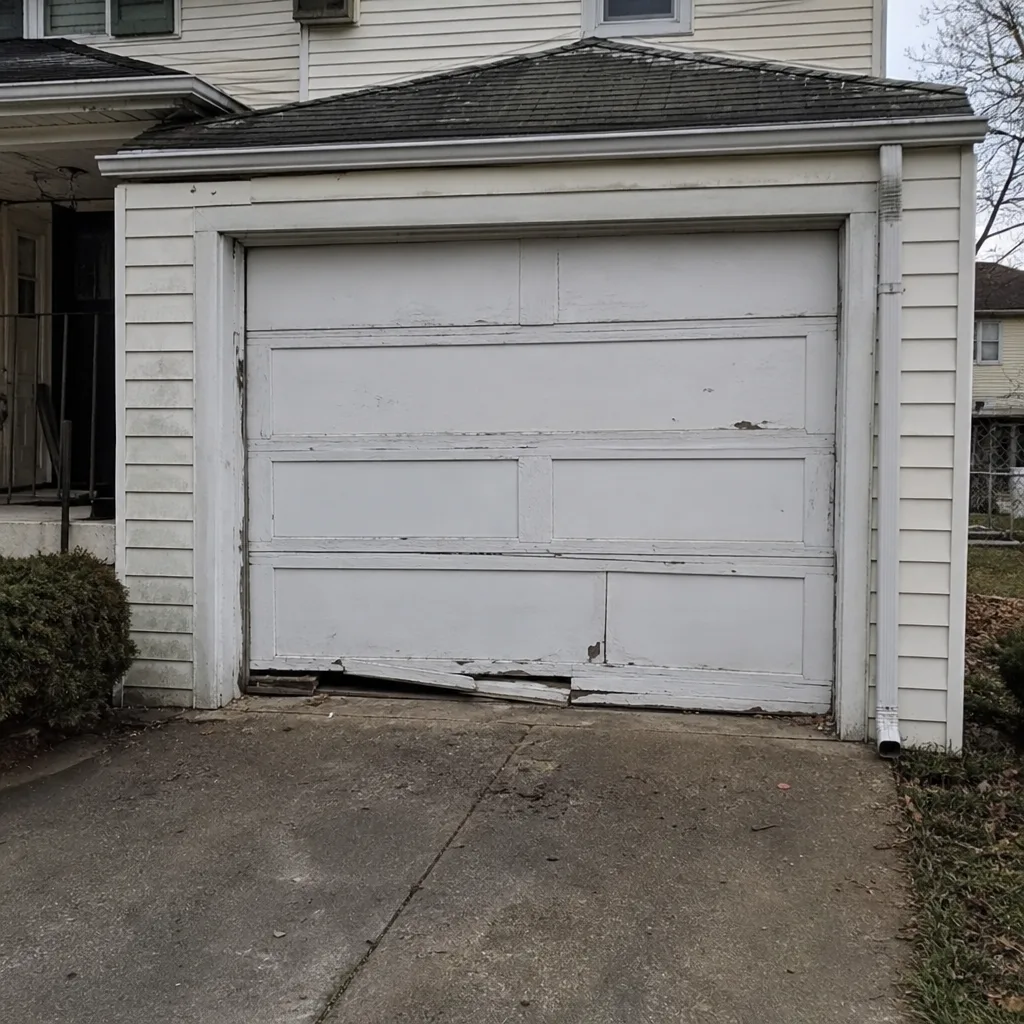 Before
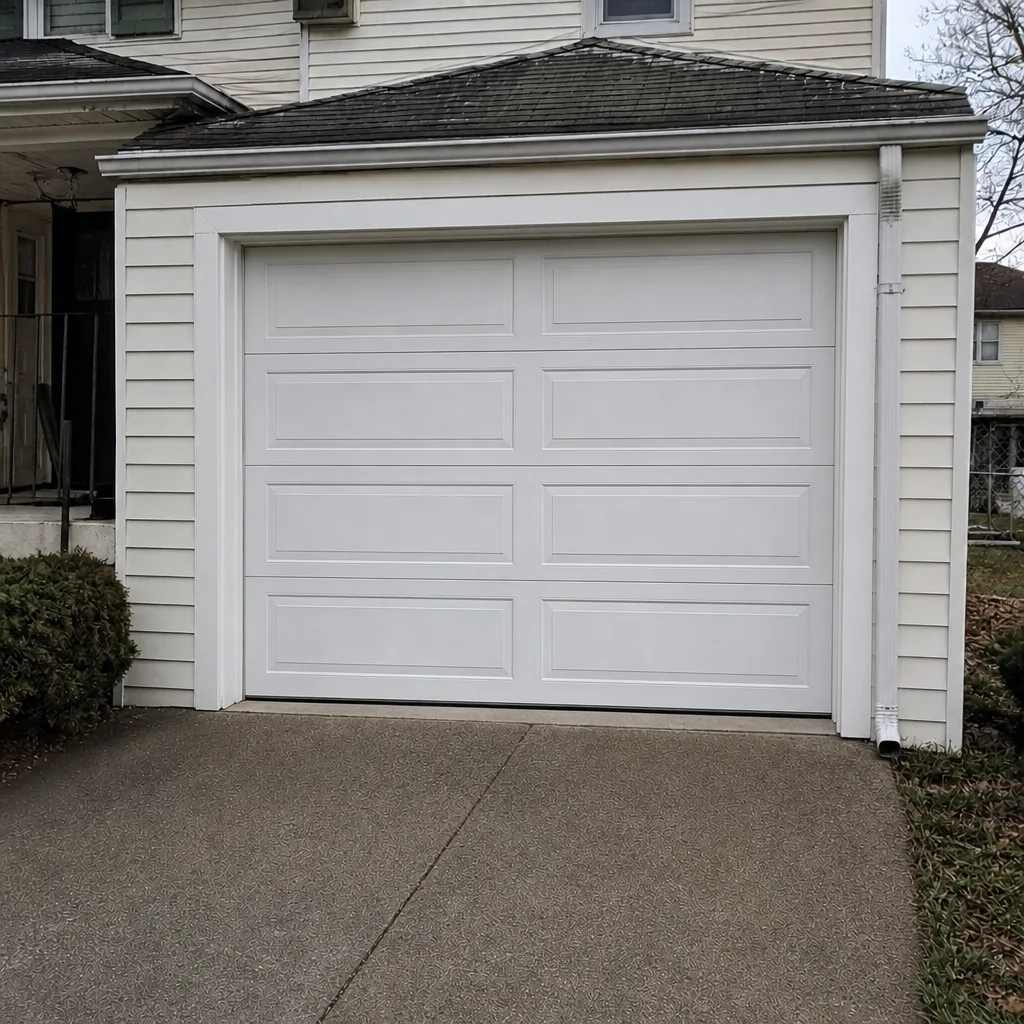 After
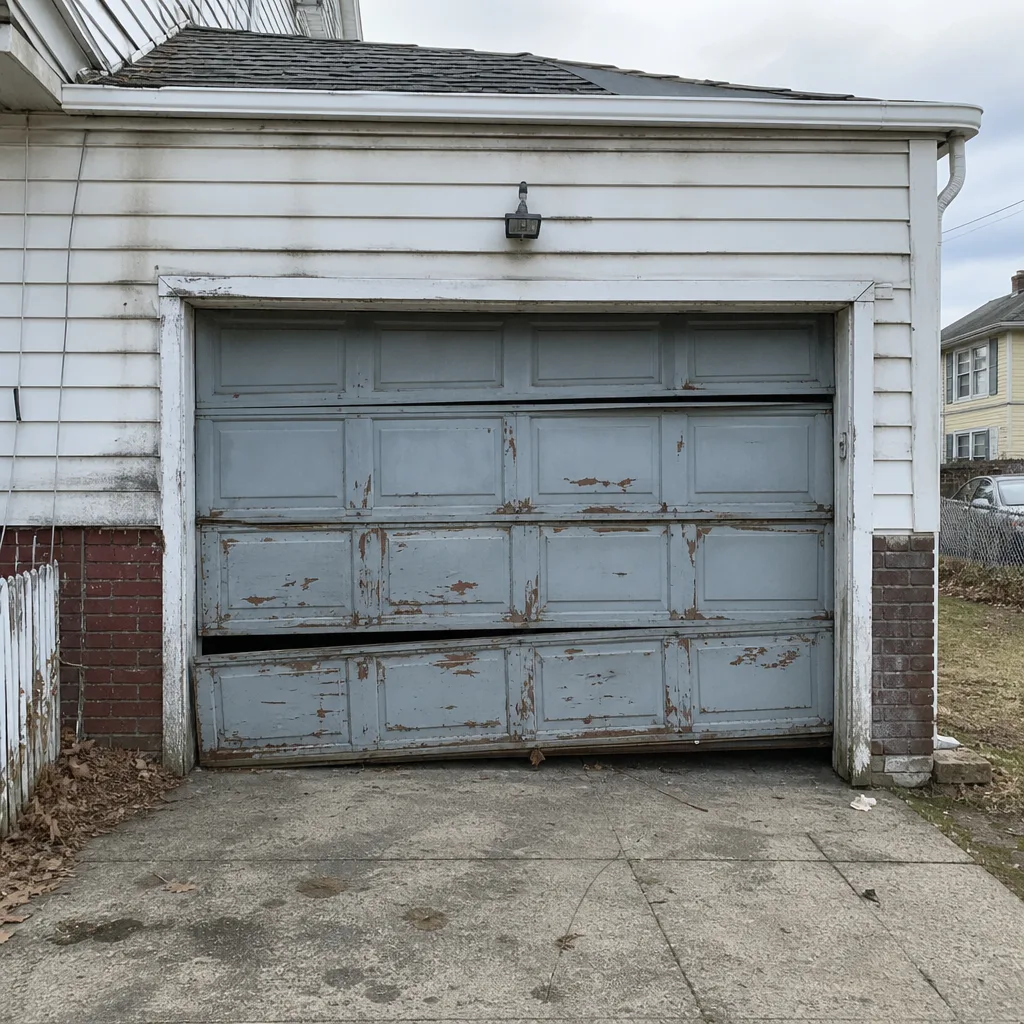 Before
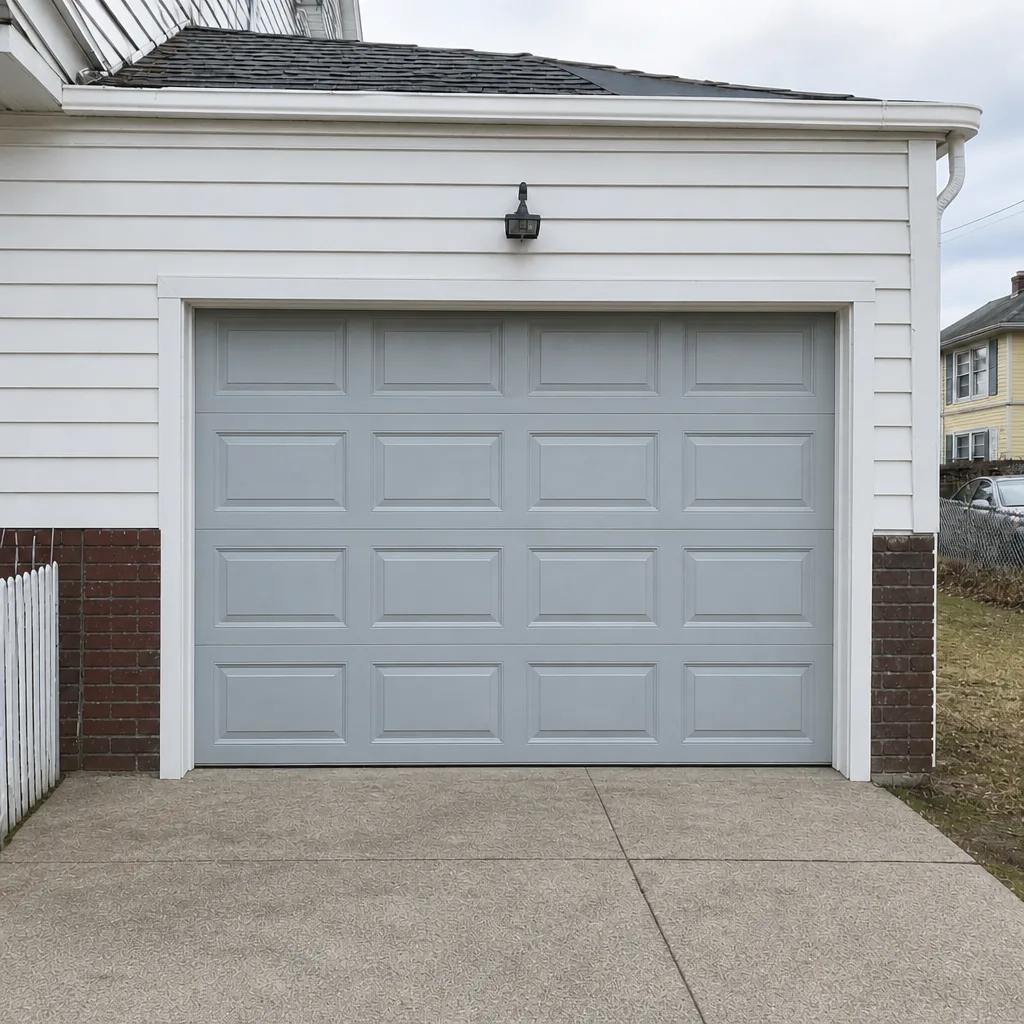 After
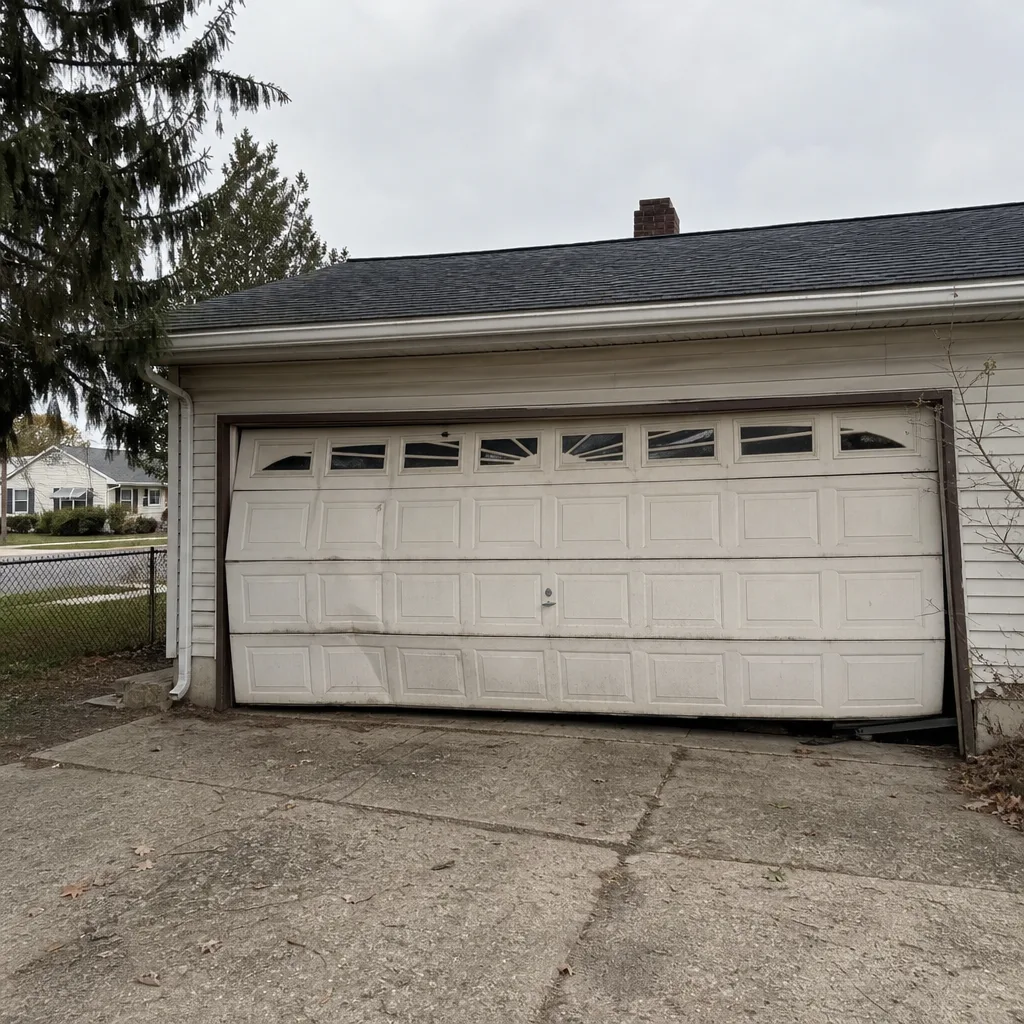 Before
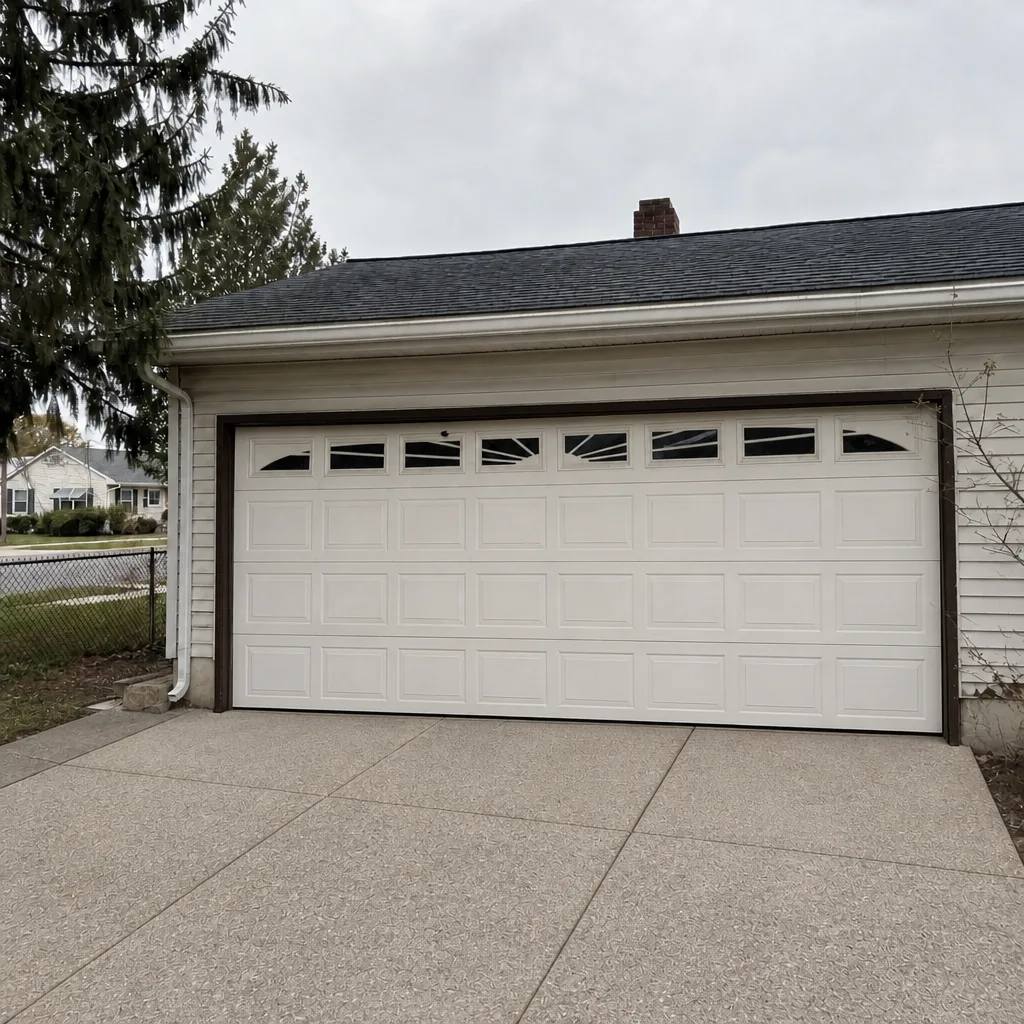 After
When to Call a Professional
Call a professional when the balance test fails, when a spring or cable is visibly broken, when the door is crooked or off its tracks, or when you hear a snap or grind and the door won’t move. Call when the door moves freely by hand but the opener hums without moving it, since that usually points at the drive gear. Call when the safety sensors won’t stay aligned after a simple adjustment, because the track itself may be bent. And call any time your instinct says the door is unsafe to operate. The symptoms above are the ones a homeowner shouldn’t chase. Garage Door Repair Weequahic offers free estimates in Weequahic – call (833) 508-9169. Our technicians have up to 8 years of experience, we work on the brand you already own, and we can often move fast when a door has failed and it can’t wait for a scheduled appointment.
Frequently Asked Questions
Garage door repair in Weequahic typically runs a few hundred dollars for common fixes like a roller replacement, a track adjustment, or a sensor realignment, while spring work and opener repairs sit in a higher range because of the specialized labor involved. The written estimate sets the final price, and we quote it before any work starts. Call (833) 508-9169 for an exact quote – estimates are free.
Same-day and emergency service is part of what we offer, not an exception we make when it’s convenient. If your door has failed and it can’t wait, call (833) 508-9169 and we’ll tell you what’s available. For planned work like a new door or a full replacement, we schedule a free measure and give you a written price rather than promising same-day turnaround.
No. The price is quoted and agreed before any work starts, so the number you approve is the number you pay. If the diagnosis turns up something different from what we expected from the call, we tell you before touching anything and you decide. Call (833) 508-9169 for a free estimate.
The local pro we connect you with is licensed and insured as their state requires, and our technicians bring up to 8 years of experience to the job. We specialize in garage doors only, so the work isn’t being handled by a general handyman. Call (833) 508-9169 with any questions about the work.
A door that rises a few inches and stops almost always has a spring that’s lost tension or a safety sensor that’s misaligned. Run the balance test with the opener disconnected; if the door won’t hold its position, the spring is the fault and it needs a professional. If the door balances and the sensors are aligned, the opener’s travel limits may need resetting. Call (833) 508-9169 if you’re unsure.
No. Torsion springs and cables are under extreme tension and can cause serious injury if handled incorrectly, and that holds in every climate. A professional with the right tools and training should do this work. Our dedicated spring repair service exists because this is one of the most safety-critical jobs on a garage door. Call (833) 508-9169 for a free estimate.
The Bottom Line
Your garage door’s behavior is a message, and the opener is rarely the one sending it. Read the door first, run the balance test, know the difference between a spring problem and an opener problem, and stop before you touch anything on the stop-here list. In Weequahic, the seasonal temperature swings near Newark Bay make spring and cable wear a year-round concern, so a door that fails the balance test in cold weather deserves attention rather than waiting. Fix the mechanical cause first and the rest follows. When the diagnosis points to work you shouldn’t do yourself, or you’d rather have a clear answer than a guess, call (833) 508-9169 for a free estimate. We work on the brand you already have, from your Chamberlain opener to your Clopay door.
Written by the team at Garage Door Repair Weequahic.